


Style Louis XVI / Ref.15733
MARQUIS Louis-Auguste, Louis XVI Style Gilt Bronze and Scagliola Clock Set
Dimensions
Width: 39 cm / 15'' ⅜
Height: 84 cm / 33'' ⅛
Depth: 24 cm / 9'' ½
Origin:
France, circa 1845
Status:
Good general condition (slight wear to the scagliola, minor losses)
Louis XVI style mantel clock set (garniture) crafted around 1845, comprising a central clock and a pair of cassolettes. The pieces are executed in chased and gilt bronze, with the main bodies coated in blue scagliola imitating lapis lazuli.
The clock is surmounted by a sculpted bouquet of lilies, tulips, and roses. The case is flanked by handles adorned with goat heads. The enameled dial, displaying Roman numerals and featuring "Avance Retard" indications at twelve o'clock, is framed by a ribbon-tied laurel torus. The entire structure rests on a foliated pedestal, supported by a fluted column base and a lower plinth. The dial bears the signature "Marquis à Paris". The movement, with a two-week power reserve, features the stamps of the clockmakers "Farret A Paris" and "Pons médaille d'or 1827".
The two matching cassolettes are topped with a pinecone finial. Their handles, featuring young goat heads, are connected by floral garlands. They rest on a gadrooned pedestal encircled by a laurel torus.
The bronze maker Louis-Auguste Marquis (1811-1885) partnered with the lighting craftsman Gilbert-Honoré Chaumont (1790-1868) in 1838. Established on Rue Chapon and later at 66 Boulevard de Strasbourg in Paris during the Second Empire, the Maison Chaumont-Marquis diversified its production of furnishing bronzes and became a supplier to the royal palaces, holding the title of "Fabricant du Mobilier de la Couronne" (Manufacturer of Crown Furniture). Working independently from 1844 onwards, Marquis delivered candelabra for the Palais-Royal in 1855. His compositions draw inspiration from the decorative repertoires of the great 18th-century bronze makers, such as Pierre Gouthière, Thomire, and the Osmond dynasty, while employing contemporary techniques like sheet metal and scagliola to replicate the appearance of hardstones.
The mechanism was produced by the clockmaker Pierre Honoré César Pons (1773-1851), active in Paris until 1846, and completed by the clock finisher Farret & Cie, established on Rue Chapon between 1840 and 1870.
Informations
Price: on request
Recommended for you :
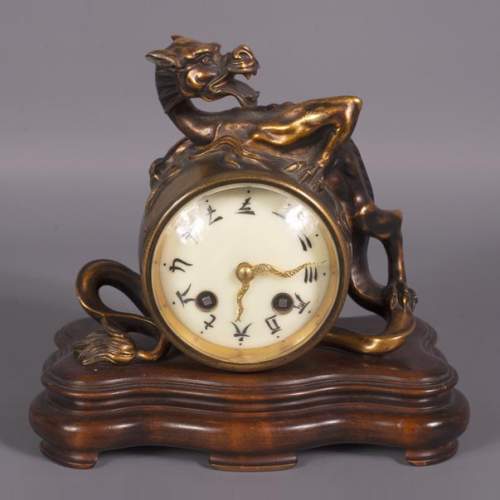
Dimensions:
Width: 19
Height: 17
Depth: 11
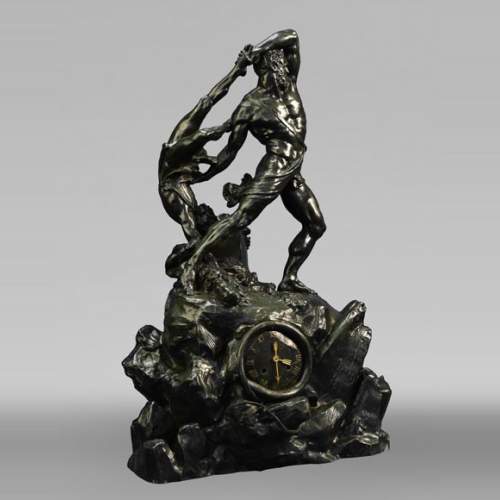
Dimensions:
Width: 43
Height: 62
Depth: 23
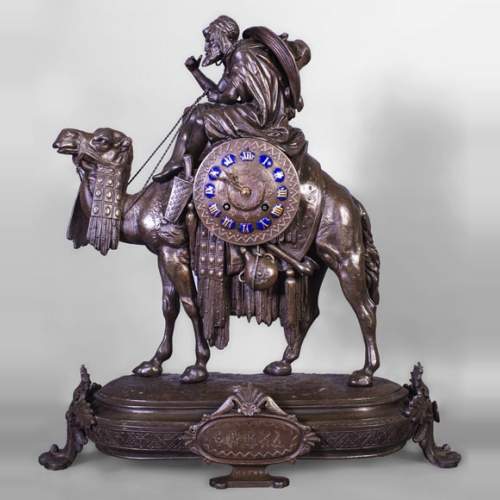
Dimensions:
Width: 44
Height: 48
Depth: 18
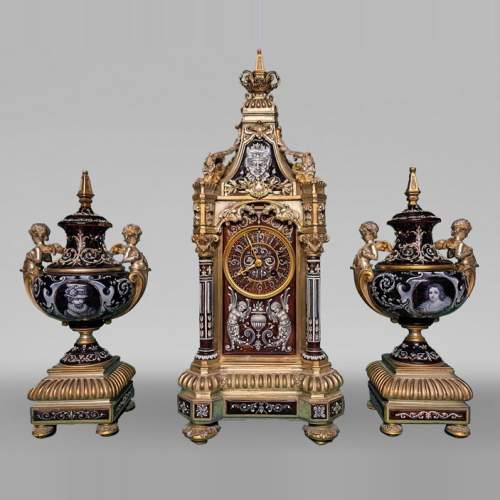
Dimensions:
Width: 22
Height: 53
Depth: 19
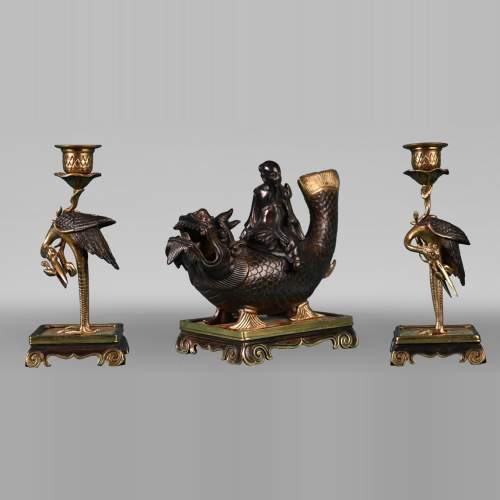
Dimensions:
Width: 19
Height: 16
Depth: 10
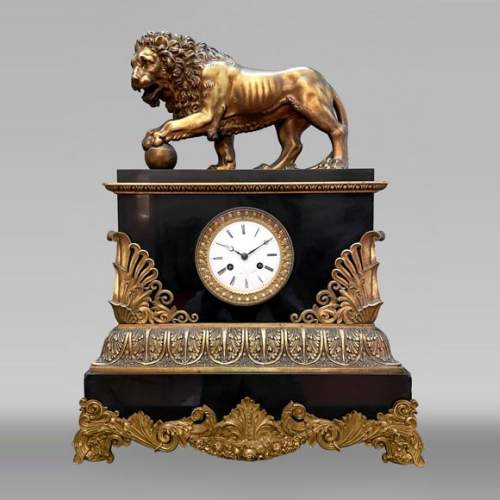
Dimensions:
Width: 50
Height: 63
Depth: 19
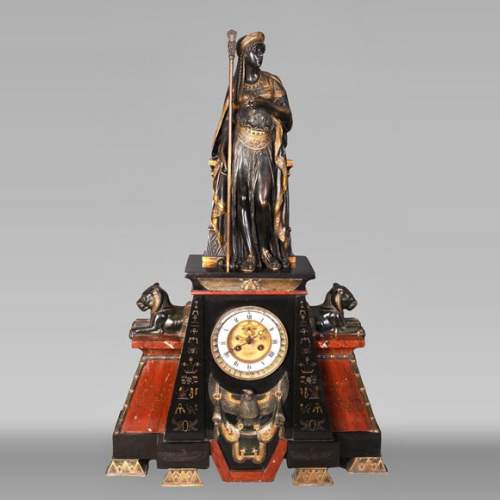
Dimensions:
Width: 49
Height: 75
Depth: 16
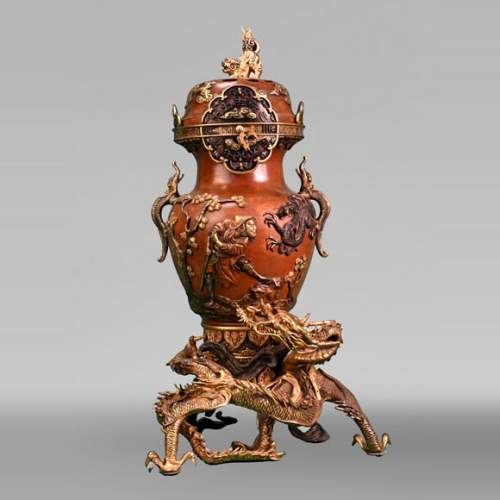
Dimensions:
Width: 31
Height: 56
Depth: 26
Dimensions:
Width: 28
Height: 90
Diameter: 21
Dimensions:
Width: 27
Height: 44
Dimensions:
Width: 31
Height: 45
Depth: 21
Dimensions:
Width: 28
Height: 57
Depth: 13