The Rubelles Faience Works
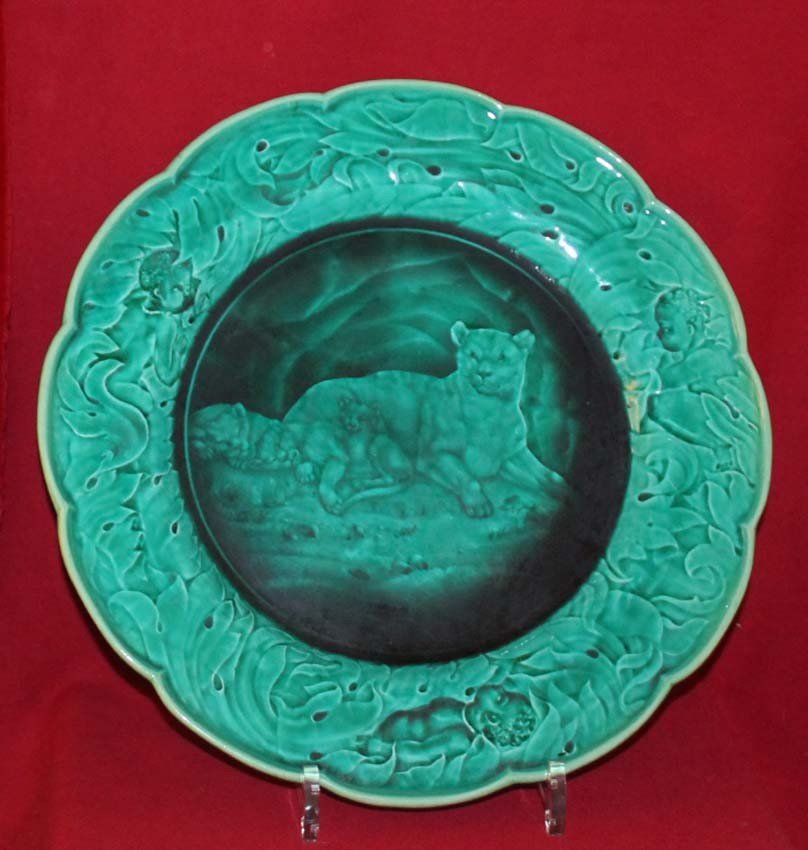
Download PDFFor some twenty years in the mid-nineteenth century, a small village of Seine-et-Marne, near Melun, housed one of the most original faience factories in France. The Rubelles faience works owed its reputation to a rare process, lithophane faience with shaded enamels (émaux ombrants), devised by Baron Charles de Bourgoing: a relief decoration covered in translucent enamels, whose hollows, thicker, appear dark while the raised parts, thinner, let the light through. The pieces, of a deep green, were noticed at the exhibitions of the day and are today highly sought after by collectors.
An inventor baron and a châtelain
Charles de Bourgoing (1791-1864), a career diplomat, devoted his leisure to the industrial arts and reportedly kept a laboratory. He developed a process of lithophane faience, for which, according to the town of Rubelles, he took out a patent in January 1827. His partner, Baron Alexis du Tremblay, owned the Château de Rubelles: it was there, around 1836 (1838 according to the Seine-et-Marne departmental archives), that the manufactory was set up to exploit the patent.
The two partners ran the business themselves. Émile Trélat was in charge of management around 1840. After 1855 the firm J. Hocédé et Cie succeeded the Tremblay-Bourgoing partnership.
The process: lithophany and shaded enamels
The principle is that of lithophany: the varying thickness of a translucent material modulates the light passing through it. Applied to fine earthenware, it consists in moulding a relief decoration and then covering it with transparent coloured enamels. Where the relief is hollowed, the enamel pools and looks dark; on the raised parts it thins and becomes light. The design thus appears in monochrome shading, from opaque shadows to highly translucent highlights — hence the name shaded enamels.
The manufactory is recognisable by its deep green, particularly intense, although other tints were also used.
A varied output
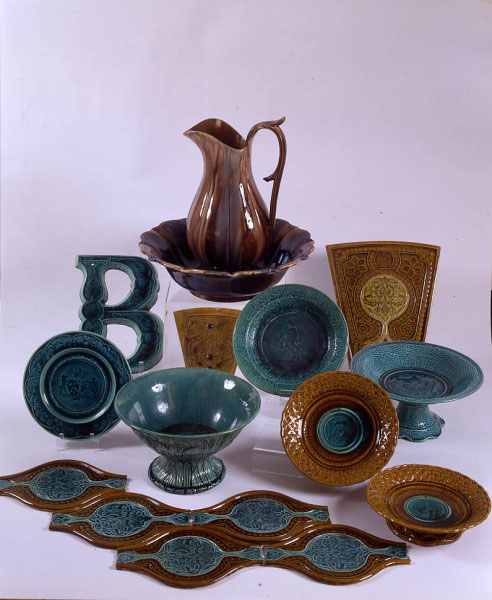
The factory made tableware and table objects (plates, dishes, teapots, bowls), cache-pots and plant stands, decorative pieces and tiles, all in this shaded-enamel technique. The subjects are often naturalistic: foliage, fruit, flowers, but also small moulded genre figures, such as figures carrying a basket.
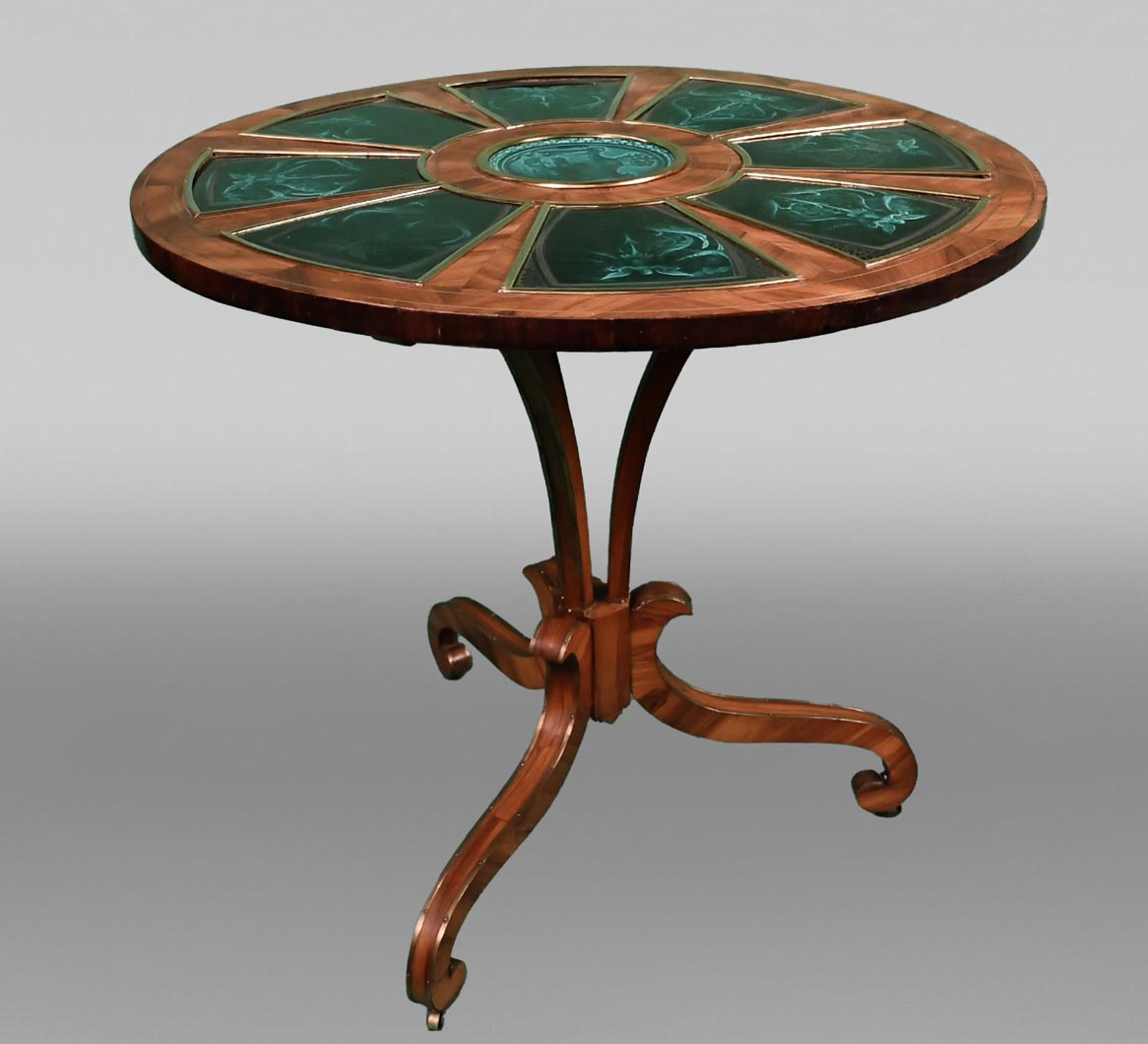
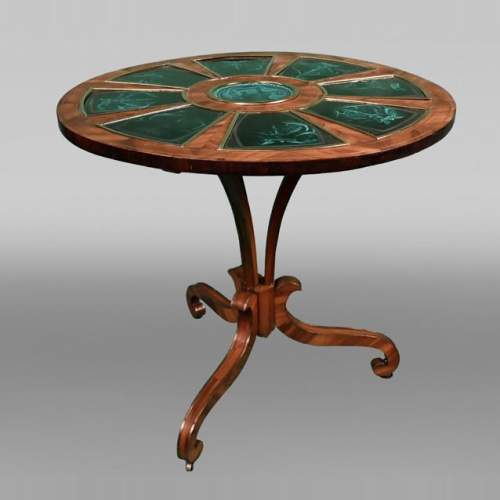
The process also lent itself to more ambitious pieces: a rosewood-veneered pedestal table with a top of shaded green enamels, made between 1842 and 1844, is known as an exceptional example of the marriage of faience and cabinetmaking.
Exhibitions
The factory took part in the national and international exhibitions of the mid-century. Bourgoing received several medals there, notably a second-class medal at the Universal Exhibition of London in 1851, where the output was noted for its novel and agreeable effect.
Marks
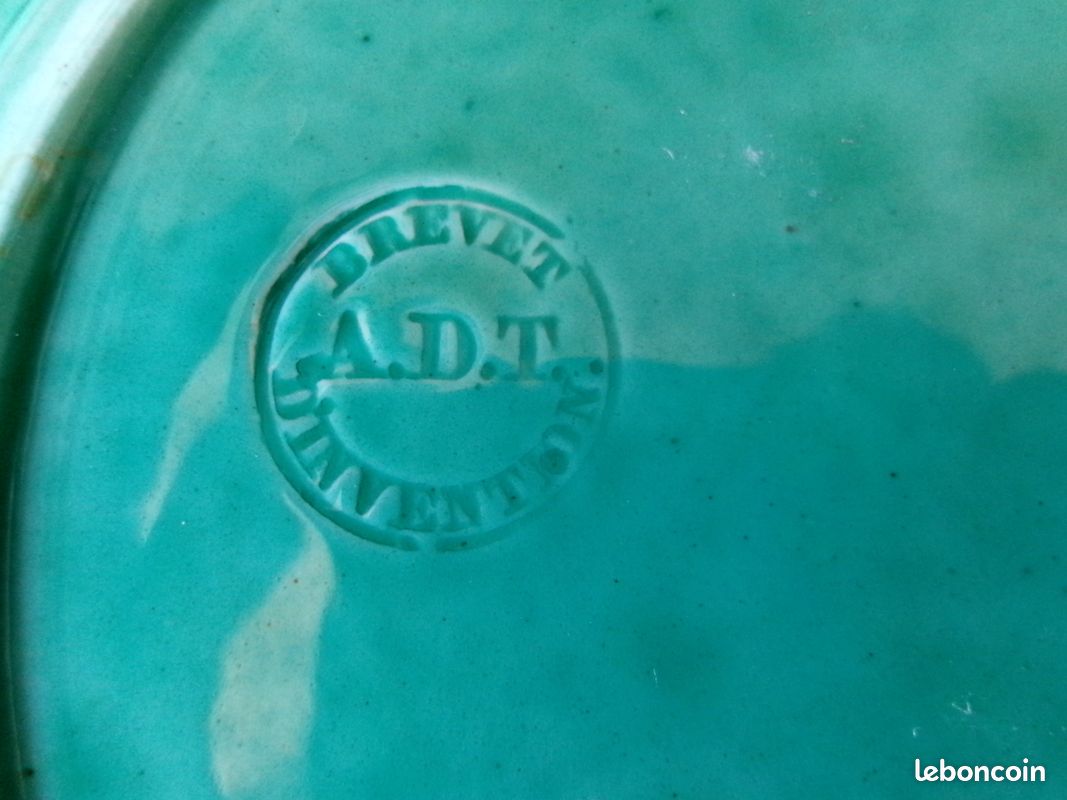
The pieces bear incised or stamped marks, notably A.D.T. (for Alexis du Tremblay) and a baron's crown in a triangle, with initials. Three groups are generally distinguished: a rare mark, perhaps earlier than 1842; a mark of the period 1842-1855, the most prosperous; and a mark after 1855.
The end of the manufactory
Activity ceased at the end of the 1850s (1857 or 1858 depending on the source), after about twenty years of existence. The delicate, costly process did not survive the closure.
Rubelles today
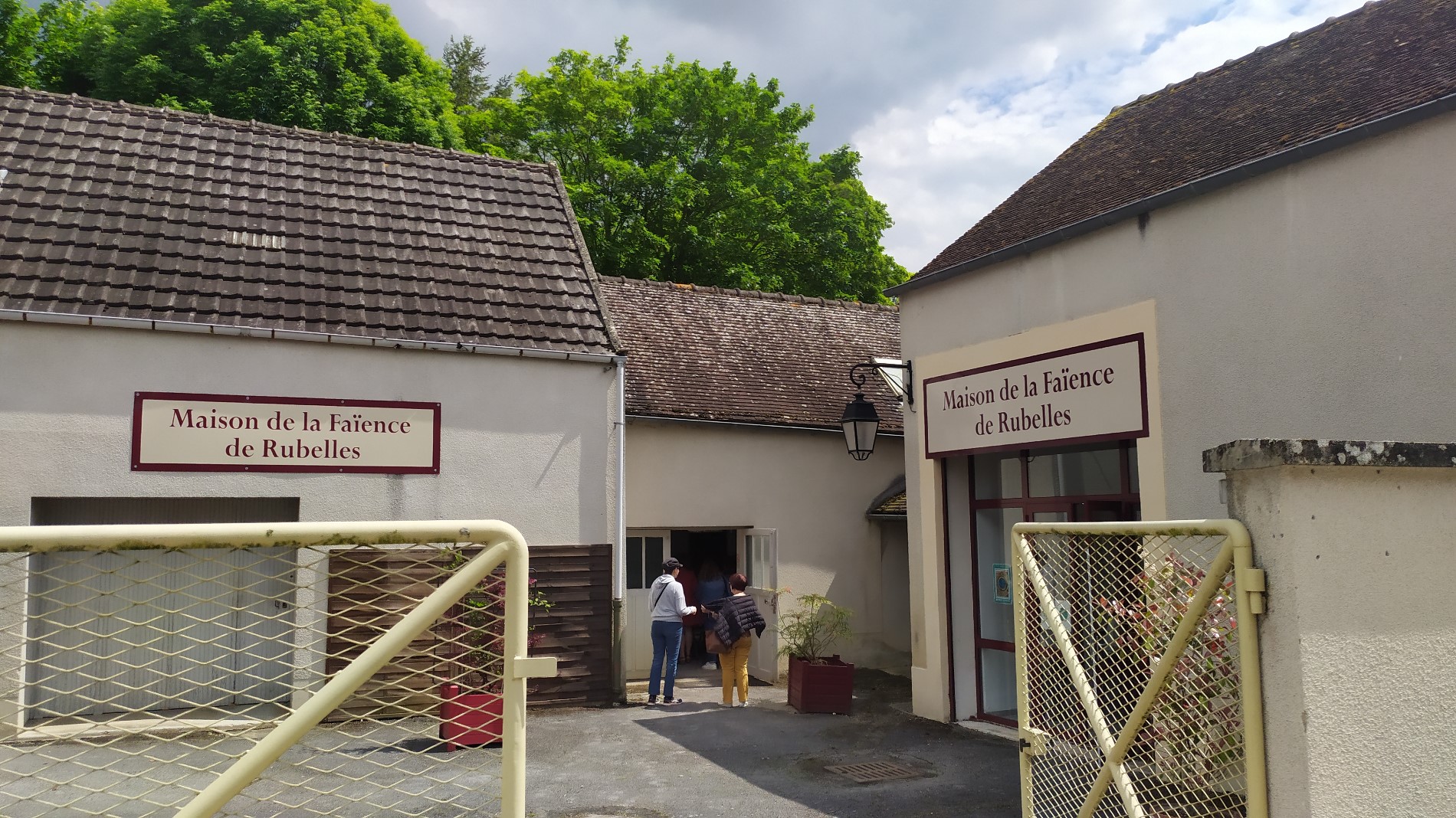
The memory of the faience works remains very much alive in the village, whose coat of arms features a faience plate with a bunch of grapes. The Maison de la Faïence, opened on 21 September 2019 opposite the town hall, presents this heritage. The Musée d'art et d'histoire de Melun holds more than three hundred Rubelles pieces. Other museums own examples, among them the Victoria and Albert Museum in London.
See also
The Faïencerie de Gien — The Choisy-le-Roi Manufactory — Vallauris — A pedestal table with a very rare enamel decoration from the Rubelles faience factory
See our ceramics, faience and porcelain
Bibliography
Institutional sources
Commune of Rubelles, "Histoire de la faïencerie", rubelles.fr.
Archives départementales de Seine-et-Marne, entry on the Rubelles faience works.
Melun Val de Seine Tourisme, "Opening of the Maison de la Faïence", 2019.
Victoria and Albert Museum, London, Flower pot stand of moulded earthenware, shaded-enamel glaze, about 1851, inv. 5453-1858.
Studies
Alix RAVEL D'ESCLAPON, La Faïence de Rubelles, Le Mée-sur-Seine, Éditions Amattéis, 1988 (reissued 2003).
Musée d'art et d'histoire de Melun, Faïences de Rubelles, exhibition catalogue.