Vallauris
Download PDFVallauris, in the Alpes-Maritimes, is one of the great French ceramic centres. Long devoted to culinary pottery, the town became at the turn of the nineteenth and twentieth centuries, under the impetus of the Massier family, one of the centres of European art pottery, before experiencing a second renaissance after the war around Picasso. This double history explains why the name Vallauris today covers such widely differing production.
The clay and the origins
Everything begins with the ground. The area holds refractory clays of excellent quality, extracted from pits known locally as terriers, which withstand the thermal shock of cooking without cracking. The town's own name, Vallis Aurea — the golden valley — is recorded from the early Middle Ages.
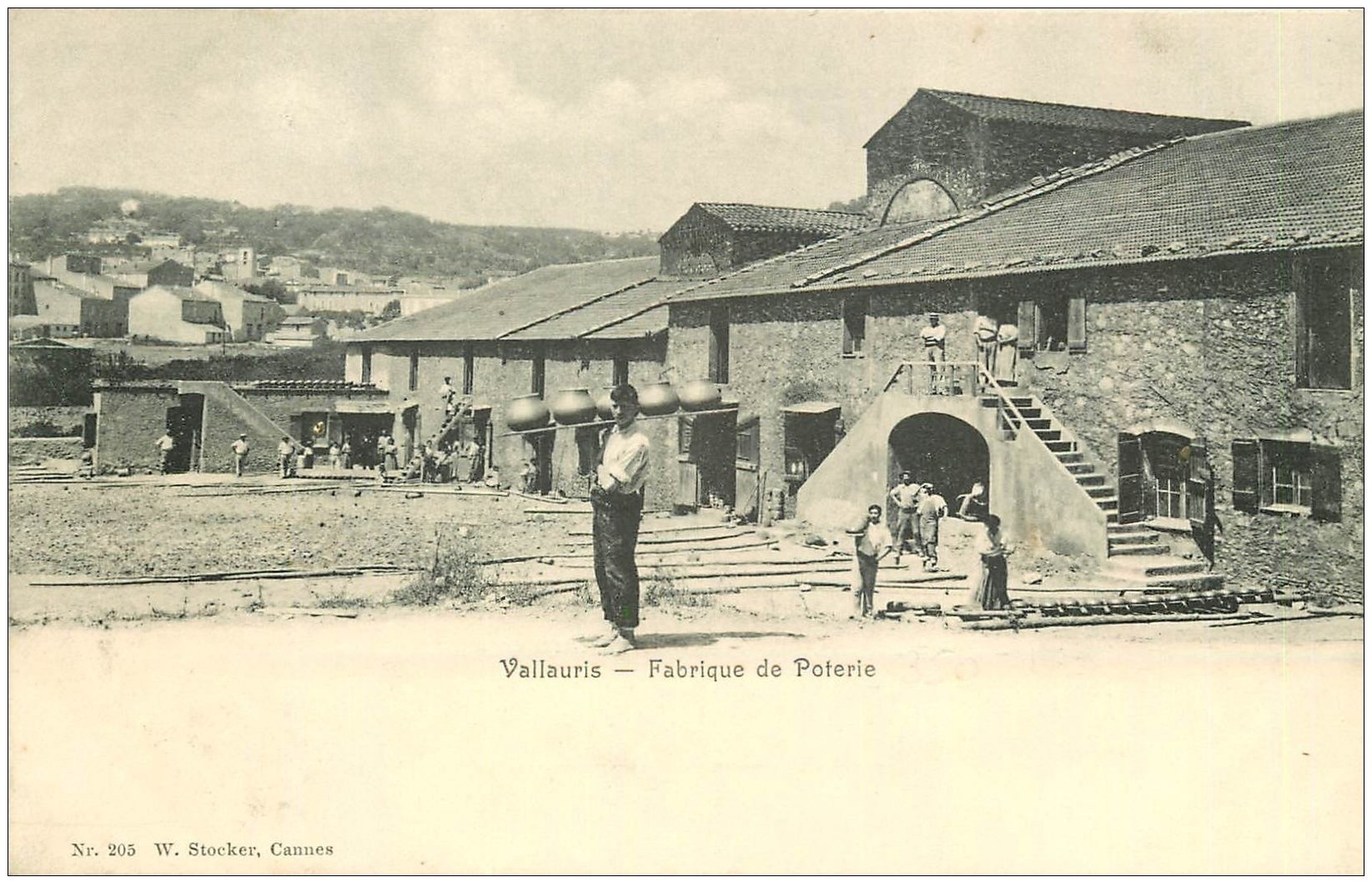
Pottery as an industry begins in the early modern period. Devastated by outbreaks of plague, the settlement was repopulated in the early sixteenth century by some sixty families from the region of Genoa, among them many potters. The first three workshops were established in what is now the rue des Tours. By the eighteenth century pottery had definitively overtaken agriculture in the local economy.
Culinary pottery
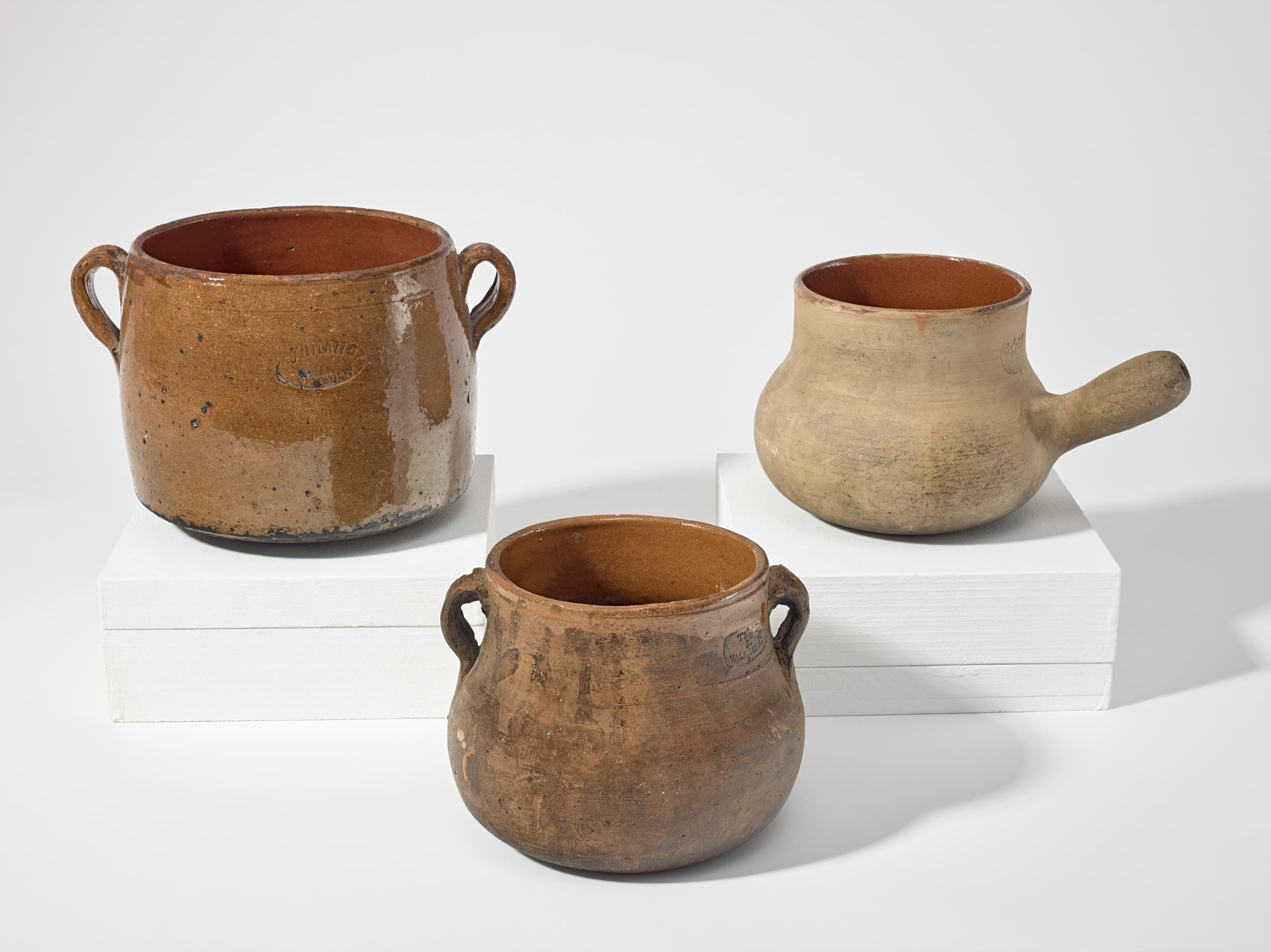
Until the middle of the nineteenth century the workshops remained small in scale and produced above all terraille: cooking pots, pans, terrines, casseroles and portable ovens, thrown and then simply glazed or covered with a marbled decoration. This utilitarian output was shipped first by sea from the port of Golfe-Juan, then by rail from 1862, whose arrival transformed the scale of distribution and allowed the workshops to organise themselves.
The Massiers and the birth of art pottery
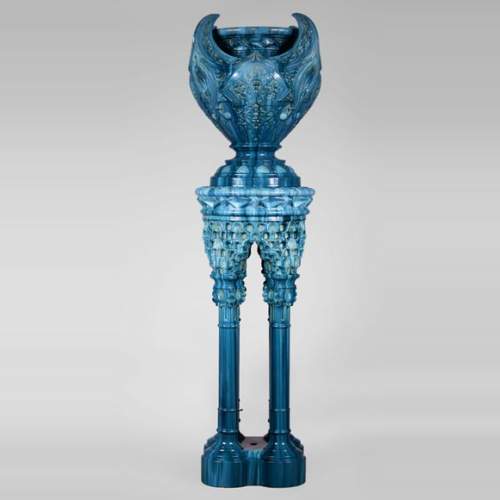
The shift towards art was the work of a family settled in Vallauris since the seventeenth century. Jacques Massier (1806-1871) was already turning the family workshop towards decorative pieces — cachepots, vases, garden ware. His sons Delphin (1836-1907) and Clément (1844-1917), together with their cousin Jérôme Massier fils (1850-1916), took the decisive step and abandoned utilitarian ware in favour of art pottery.
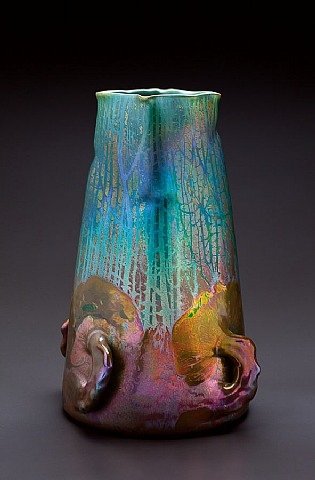
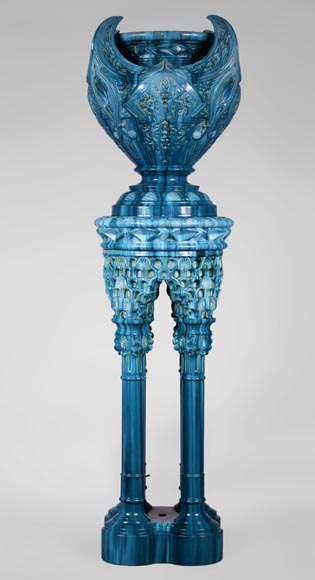
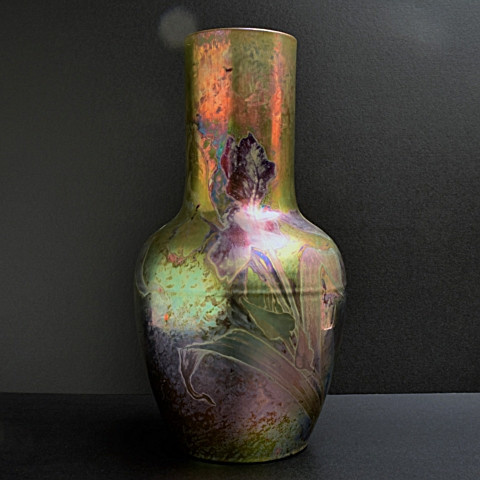
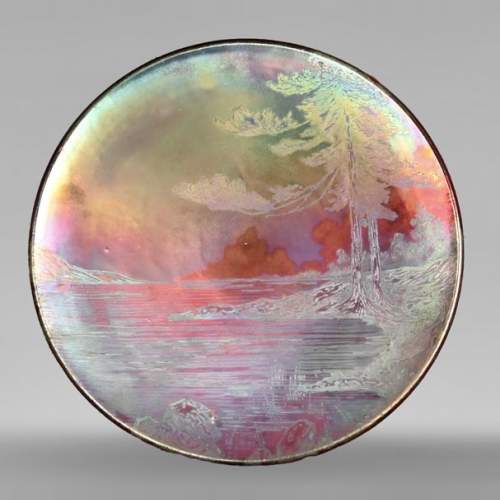
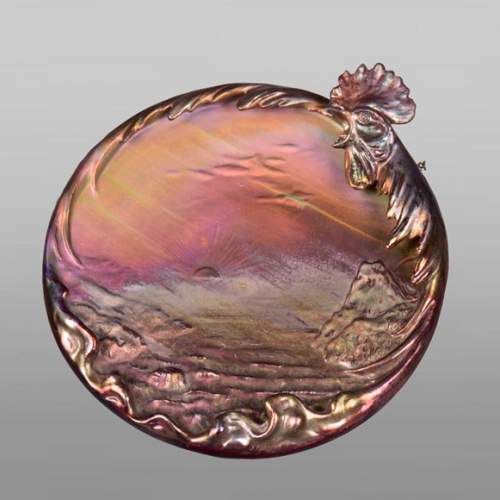
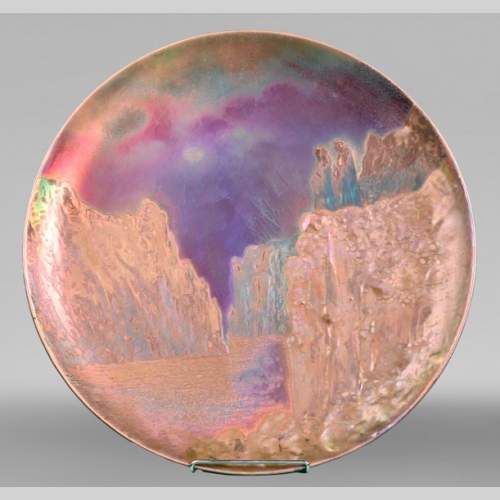
Their training owed much to the Bolognese ceramist Gandolfo Gaetano, settled in Vallauris from the middle of the century, who passed on several techniques including enamelled earthenware. The three Massier factories then developed a vocabulary of their own: barbotine in brilliant colours, inlaid coloured enamels, metallic pigments and, from 1886-1887, the iridescent metallic lustre perfected by Clément. The celebrated peacock blue, for its part, was created by Delphin with his mother Élisabeth.
The Massiers grasped the importance of the Universal Exhibitions early and won repeated awards at them. They opened outlets in their own region but also in Germany and England, where they became suppliers to the Crown. Their work forms the link between Victorian majolica and Art Nouveau pottery.
The twentieth century and Picasso
Traditional production declined between the wars. In 1938, Suzanne Douly (1905-1974), a graduate of the Lyon school of fine arts trained in ceramics by the local potter Jean-Baptiste Chiapello, leased a disused culinary pottery and founded with Georges Ramié (1901-1976) the Madoura workshop — an acronym of "Maison Douly Ramié".
In 1946, at the annual potters' exhibition held at the Nérolium, the village agricultural cooperative, Pablo Picasso discovered the Madoura pieces and met the Ramiés. He modelled a few figures, then began his work as a ceramist in earnest in the workshop in July 1947. He settled in Vallauris in 1948 and remained until 1955, creating several thousand pieces which Madoura would publish.
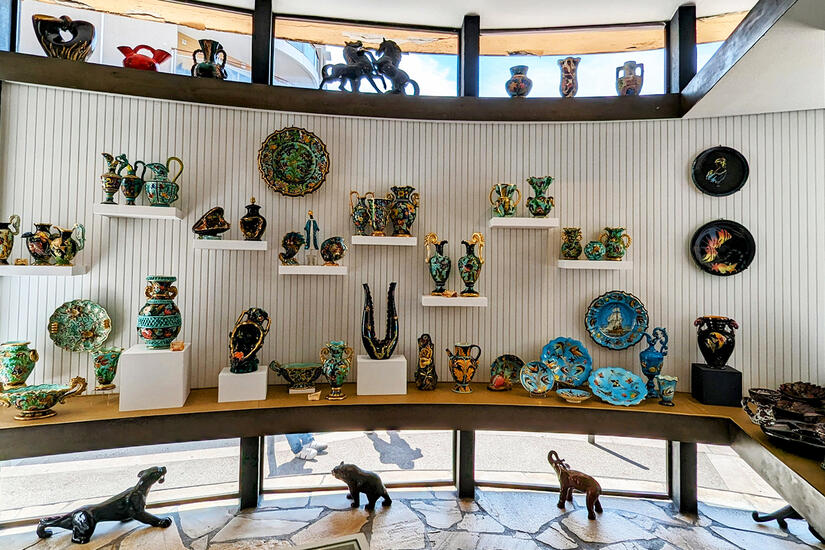
The effect was considerable. Picasso's presence drew painters and sculptors, encouraged the emergence of a new generation of potters — Roger Capron, Jean Derval, Robert Picault, André Baud — and made the 1950s the golden age of the "town of a hundred potters". The image of Vallauris as a centre of traditional pottery then gave way for good to that of a town of artists.
Today
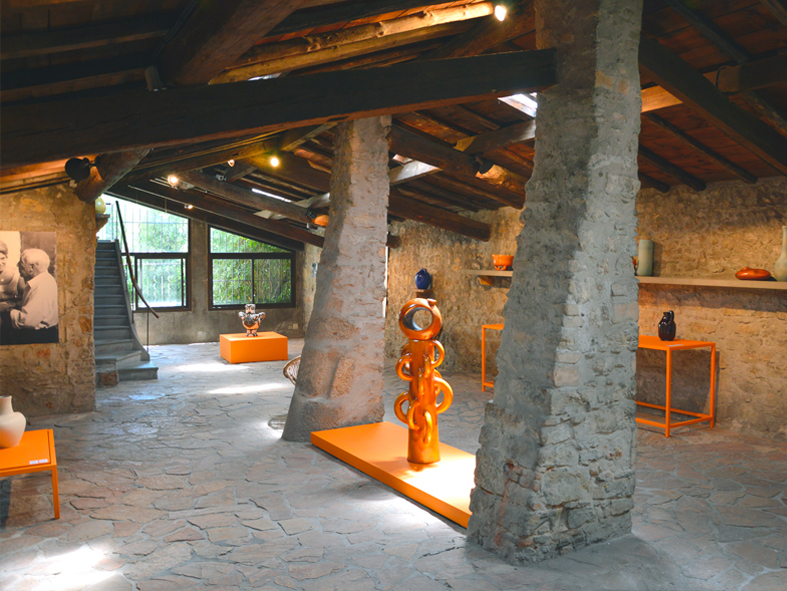
Vallauris retains an important group of museums comprising the Musée national Picasso "La Guerre et la Paix", housed in the castle chapel, the Musée Magnelli and the Musée de la Céramique, which holds pieces by Clément and Delphin Massier among others. The Madoura workshop, now in public ownership, has become a place of art and history.
See also
Clément Massier — Delphin Massier — Jérôme Massier fils — Murano — The Sarreguemines manufactory — The Sèvres manufactory — Art Nouveau
See our ceramics, earthenware and porcelain
Bibliography
Reference entries
"Céramique de Vallauris", Encyclopædia Universalis.
Institutions
Musée de la Céramique, Musée Magnelli and Musée national Picasso "La Guerre et la Paix", Vallauris Golfe-Juan — collections of Vallauris ceramics from the nineteenth century to the present day.
Town of Vallauris Golfe-Juan, heritage department — history of art pottery and of the Massier family.
Conseil départemental des Alpes-Maritimes, "Savoirs des Alpes-Maritimes" — documentary file on the Madoura workshop.
Atelier Madoura, Vallauris — collections of ceramics by Picasso and Suzanne Ramié.