Delphin Massier (1836-1907)
Download PDFDelphin Massier belongs to the famous dynasty of Vallauris potters, of which he is one of the three great representatives alongside his brother Clément and his cousin Jérôme. Less well known than Clément, who gave his name to metallic lustre, he distinguished himself through pieces of a different kind: large planters on pedestals, vases with floral decoration and animal models in barbotine, where polychrome enamel picks out the relief.
A child of Vallauris
Honoré Delphin Massier was born in Vallauris in 1836, into a family of potters established in the town since the seventeenth century. He was the elder brother of Clément and, like him, grew up in the workshop of their father, Jacques Massier, who gradually steered the factory towards decorative ceramics. The history of this dynasty and of the artistic revival of Vallauris is told in the entry on Vallauris ceramics.
From the family workshop to his own house
When Jacques Massier died in 1871, Delphin went into partnership with his brother Clément. The partnership lasted until Clément left Vallauris in 1883 to found his own manufactory at Golfe-Juan. Delphin stayed in Vallauris and, according to the Musée d'Orsay entry, founded his own firm in 1889. The two brothers then followed separate paths: Clément devoted himself to research on iridescent glazes, Delphin to a more sculptural repertoire of forms and decoration.
An Orientalist inspiration
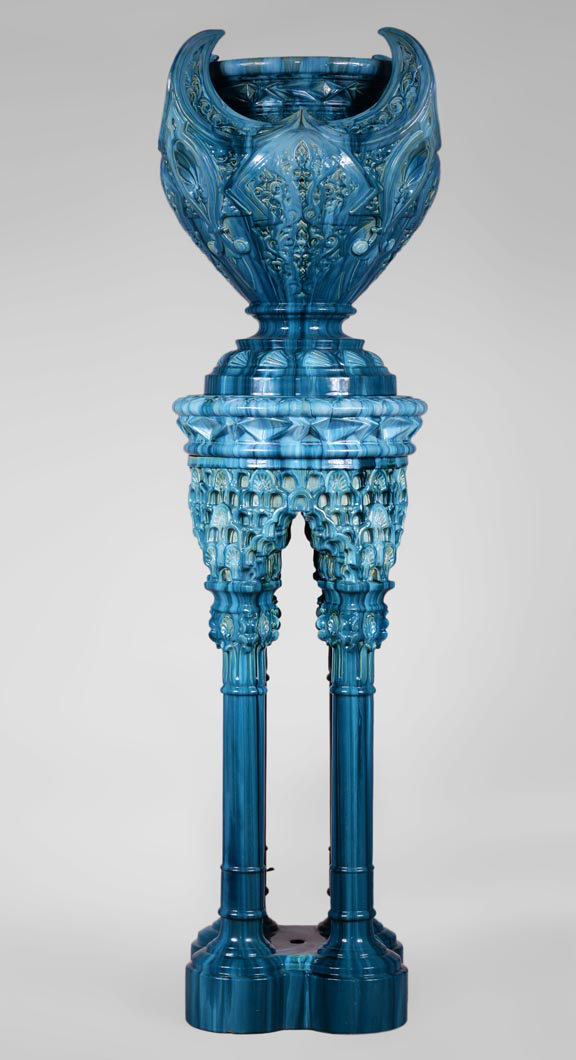
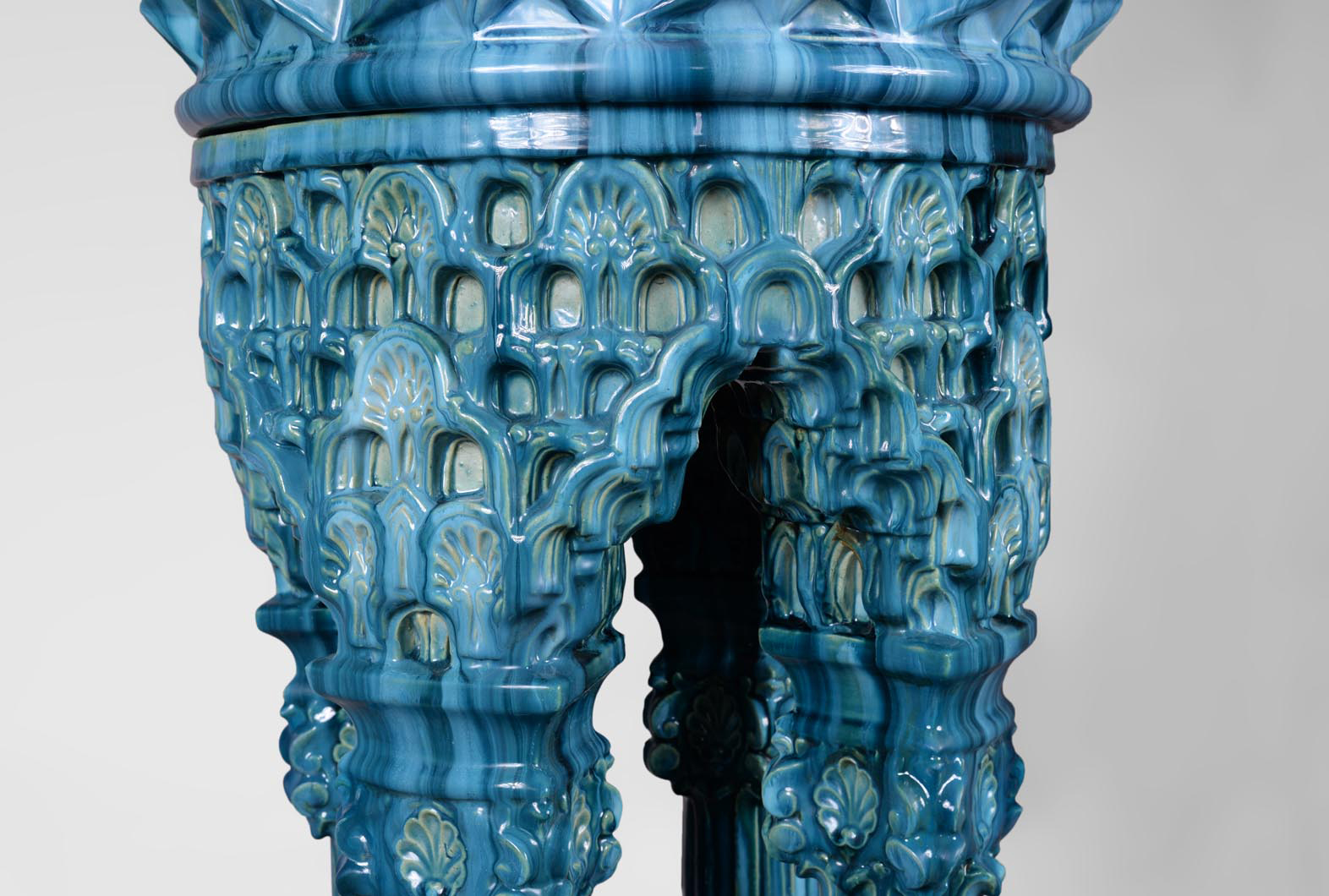
Part of his output belongs to the Orientalist taste then running through the European decorative arts. The Vallauris ceramicists found in Hispano-Moorish and Persian art a repertoire of forms, deep blues and geometric motifs. Delphin gave it a monumental version in his large Orientalist planters, around 1880: an earthenware vase set on a pedestal with small columns adorned with muqarnas (the stacked honeycomb cells of Islamic architecture), the whole covered in abstract floral ornament in shades of peacock blue. This range of blues remained one of the hallmarks of the Massier workshops.
Barbotine, flowers and animals
The other side of his work belongs to barbotine: the term refers to the liquid clay slip with which relief motifs are modelled or applied before being covered in coloured enamels. Delphin Massier drew on it for a naturalistic repertoire of plants and animals: irises, thistles, water lilies, birds, frogs or cockerels, depending on the catalogues and collections. The decoration is treated in polychrome enamels, sometimes iridescent, and ties his pieces to Art Nouveau.
A typical group combines a tall column decorated with a pink flamingo among reeds and a cachepot with iris flowers, both in polychrome enamelled barbotine ceramic: an example of how he put nature at the service of the interior and the winter garden.
The planters of around 1900
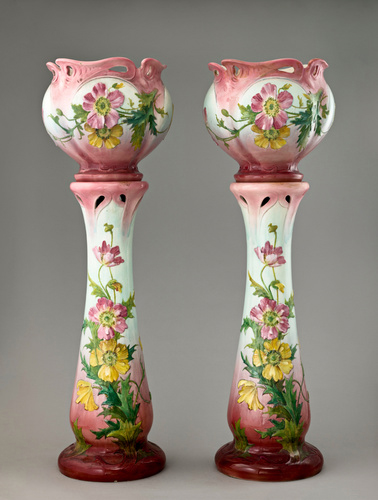
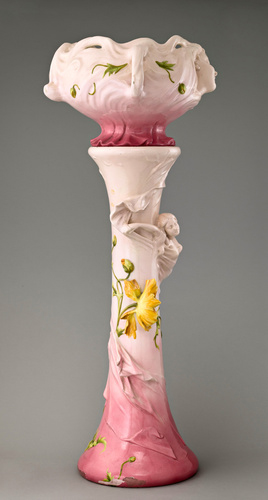
The collections of the Musée d'Orsay hold several of his pieces, dated to around 1900. They include a planter on a pedestal, one of a pair, in earthenware with polychrome underglaze decoration, 140 cm high, combining flowers, foliage, poppies, heads and female nudes; and a planter stand 135 cm high with a floral theme. These works entered the museum through gifts in 2008 and 2012. Their scale shows the period's taste for large ceramic decoration, intended for vestibules, conservatories and winter gardens.
Signature and mark
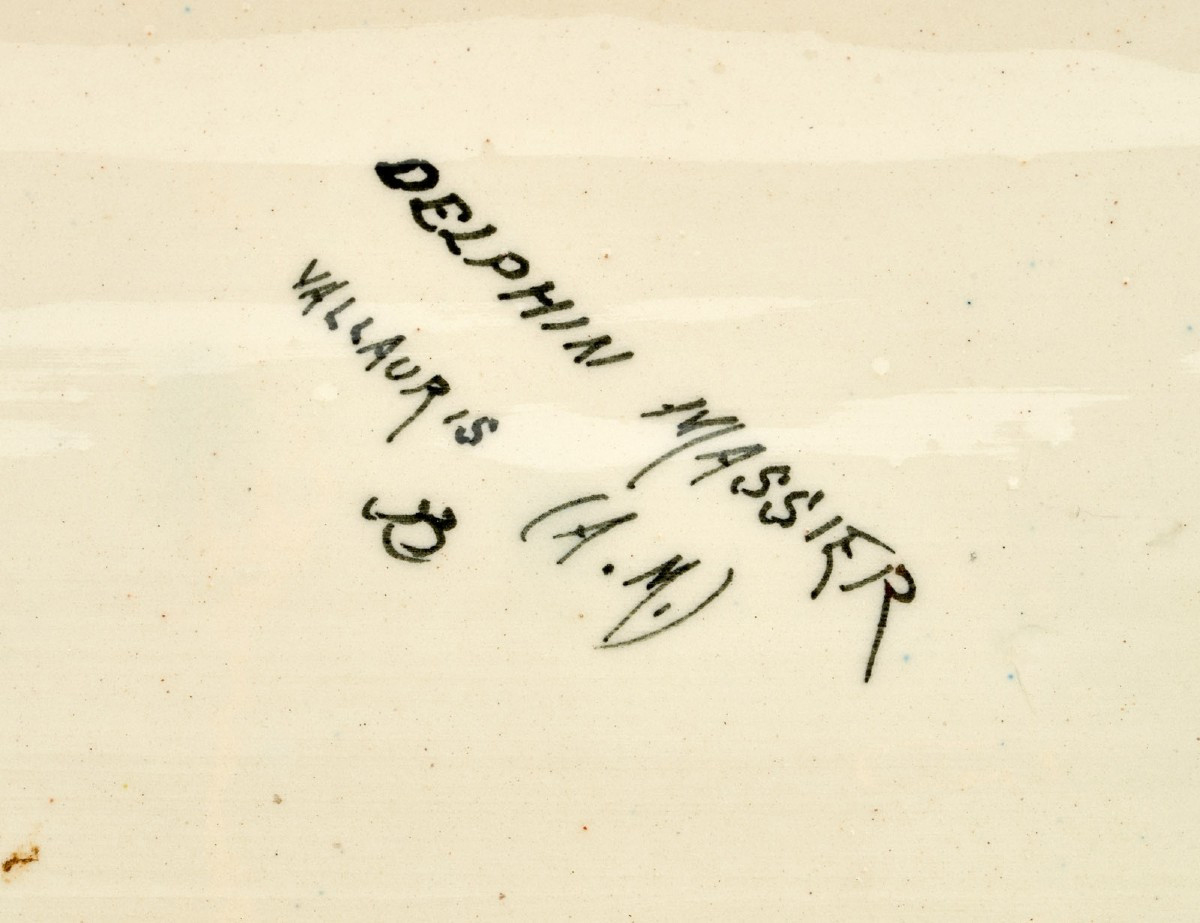
Delphin Massier's pieces generally bear his signature together with the place of manufacture, in the form Delphin MASSIER Vallauris A.M. — the initials standing for the Alpes-Maritimes département.
Legacy
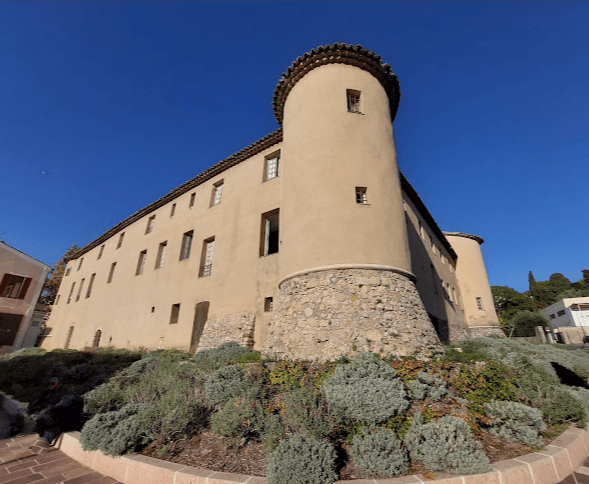
Delphin Massier died in 1907. His work, long overshadowed by his brother's, is today recognised as one of the most spectacular expressions of Riviera art ceramics in the late nineteenth century. The Musée d'Orsay holds several of his planters, and the Ceramics Museum in Vallauris, housed in the château, presents the output of the period in which the Massiers made the town a centre of art pottery.
See also
Vallauris — Clément Massier — Jérôme Massier fils — Art Nouveau — The Gréber family — Émile Müller
See our ceramics, faience and porcelain
Bibliography
Reference entries
Musée d'Orsay, Paris, artist entry "Massier, Delphin" (Honoré Delphin, Vallauris, 1836-1907), documentary resources database.
Town of Vallauris Golfe-Juan, "La céramique artistique" — the role of the three Massiers (Clément, Delphin and Jérôme) in the shift from utilitarian pottery to art ceramics.
Vallauris Golfe-Juan tourist office, entry "The Massiers".
Public collections
Musée d'Orsay, Paris — Delphin Massier, Planter on a pedestal (one of a pair), about 1900, earthenware with polychrome underglaze decoration, H. 140 cm (gift, 2012, inv. OAO 1919 2).
Musée d'Orsay, Paris — Delphin Massier, Planter stand, about 1900, earthenware, H. 135 cm (gift, 2008, inv. OAO 1751 2).
Musée de la Céramique, Château de Vallauris — Vallauris ceramics of the period.