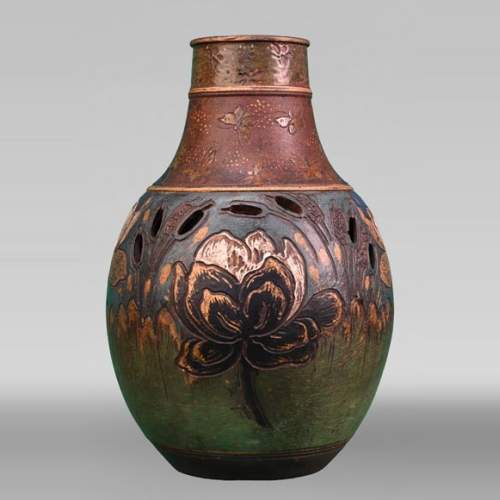
Ernest Chaplet (1835-1909)
Download PDFBorn in Sèvres on 8 July 1835 and died in Choisy-le-Roi on 20 June 1909, Ernest Chaplet is regarded by the Metropolitan Museum of Art in New York as the "father of French art pottery". He took part in nearly every current of the ceramic revival of the late nineteenth century: barbotine, the stoneware of the Haviland workshop, then the oxblood and flambé porcelains of his later years. He trained or inspired a whole generation of ceramicists, from Albert Dammouse to Auguste Delaherche, and even Paul Gauguin. His work is held at the Musée d'Orsay, the Petit Palais and the Victoria and Albert Museum.
Sèvres, Laurin and barbotine
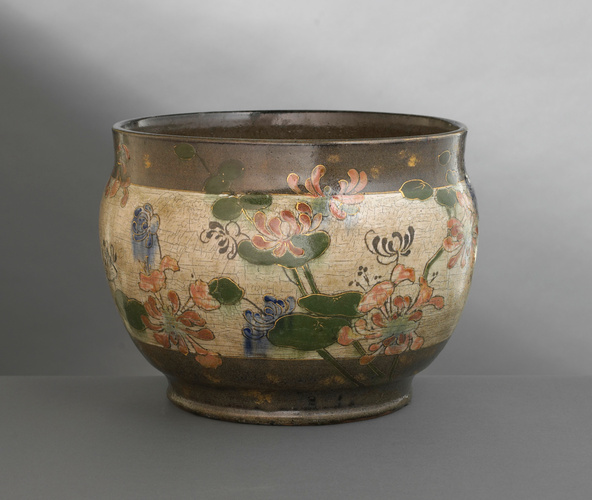
Chaplet entered the Sèvres manufactory at the age of twelve, according to the Victoria and Albert Museum, and trained in decoration, design and ceramic techniques. He then worked for François Laurin, whose factory was in Bourg-la-Reine according to the Metropolitan Museum (the V&A places it in Choisy-le-Roi). He is credited with developing barbotine, a decoration painted in liquid clay whose thick brushwork has been compared to Impressionist painting; according to Wikipedia the invention dates from 1871 and was made with Laurin, whereas the V&A places its development in the Auteuil workshop.
The Haviland workshop: Auteuil and rue Blomet
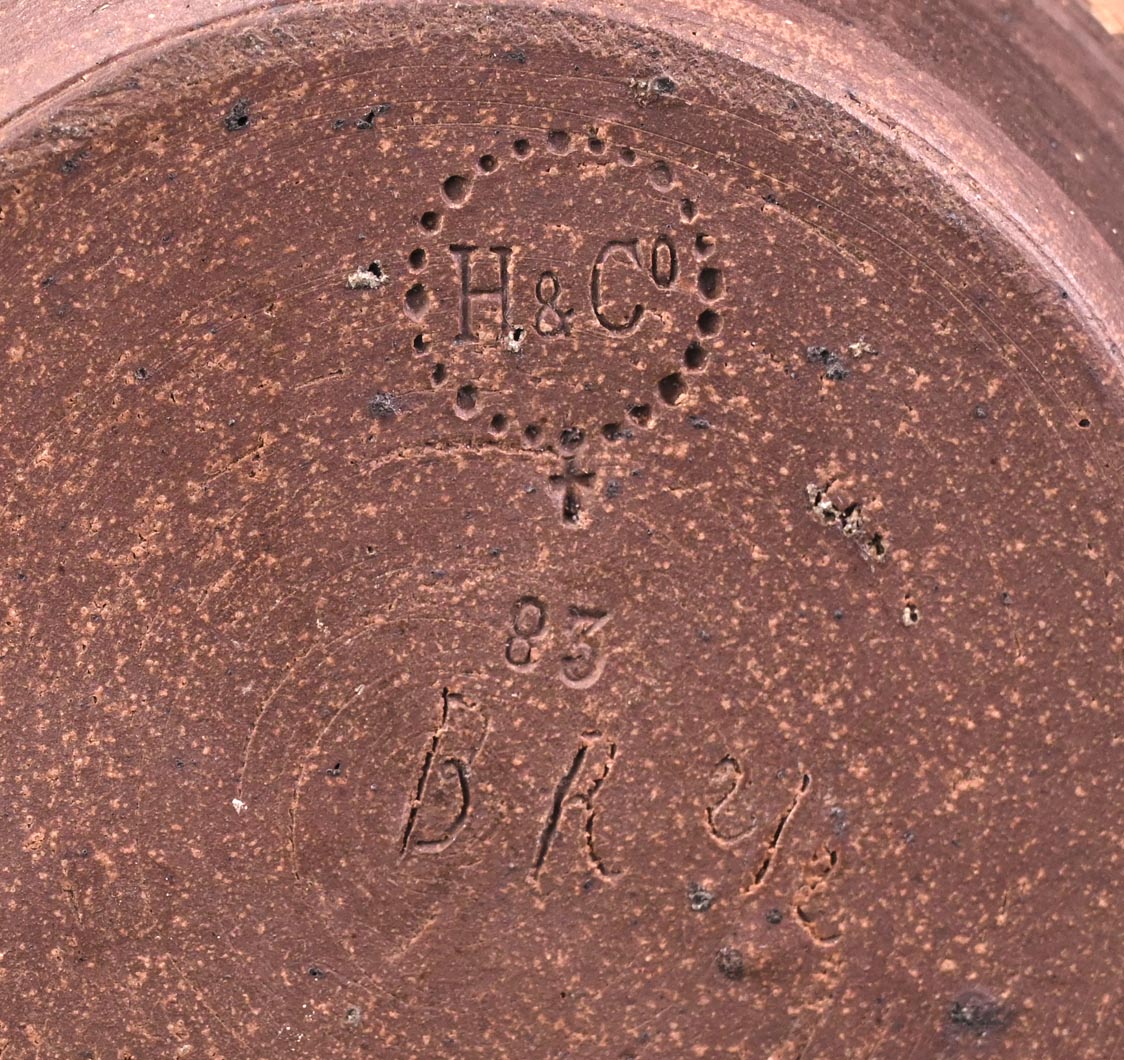
In 1875 Chaplet joined the Auteuil ceramics workshop of the firm Charles Haviland et Cie, the great Limoges porcelain house. In the early 1880s (1881 or 1882 depending on the source) he ran the Paris workshop in the rue Blomet, in Vaugirard. There he produced, from 1882 to about 1885, brown stonewares with the clay left partly exposed, often decorated by outside artists such as Albert-Louis Dammouse, who frequently signed them. According to the Petit Palais entry, this series met with no commercial success and was soon abandoned. In 1882 he opened a workshop with Albert-Louis Dammouse, where they produced stonewares with Japanese motifs and Chinese forms; the sculptor Jules Dalou worked alongside him for a time.
It was at this time, in the early 1880s, that he learned to make the Chinese oxblood red glaze. He acquired the Haviland workshop around 1885-1886 and worked independently from 1886.
Choisy-le-Roi (1887-1909)
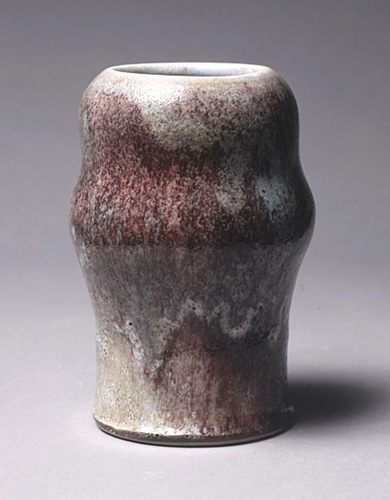
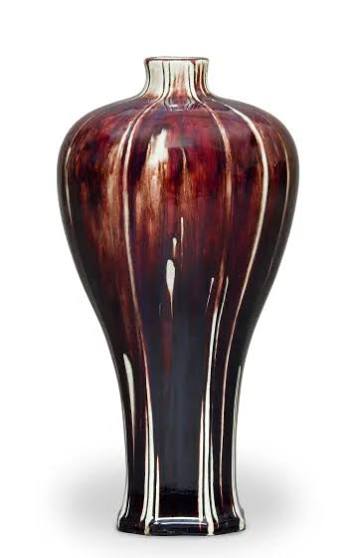
In 1887 Chaplet sold the rue Blomet workshop to Auguste Delaherche and settled in Choisy-le-Roi, where he specialised in porcelain of Chinese inspiration with high-fire decoration: flambé reds, oxbloods, glazes streaked with purple, yellow and white. He won a medal at the Exposition Universelle of 1889 for his oxbloods, and his name was acclaimed at the 1900 Exposition. The V&A holds a small flambé porcelain vase from Choisy, about 1895.
Chaplet kept his recipes and firing temperatures secret, to the point of destroying his notebooks. In 1886 he met Paul Gauguin, introduced by Félix Bracquemond, and Gauguin's first ceramics were made in collaboration with him, some fifty stonewares in all. Around 1889 he also made ceramic editions of works by Dalou, René de Saint-Marceaux and Auguste Rodin.
The last years
Having gone blind in 1904, Chaplet ended his career and handed his workshop to Émile Lenoble, his son-in-law according to most sources (Larousse presents him as his grandson). He died in Choisy-le-Roi in 1909.
Chaplet in collections
The Musée d'Orsay holds by him a cache-pot of 1885-1886, a spherical vase of 1893 and several vases dated 1899, 1900 and to the period 1890-1909. The Petit Palais, which in 2011 received a gift from Dr Philippe Engel completing its brown stonewares, owns several of his pieces; the journal Sèvres devoted an article to this collection in 2012. His works are also at the Victoria and Albert Museum, the Musée Adrien-Dubouché in Limoges, Boulogne-sur-Mer, Troyes, Los Angeles and New York.
See also
Pierre-Adrien Dalpayrat — Edmond Lachenal — Art Nouveau — The 1889 Exposition Universelle
See our ceramics, faience and porcelain
Bibliography
Institutional sources
The Metropolitan Museum of Art, New York, "French Art Pottery", Heilbrunn Timeline of Art History, metmuseum.org.
Victoria and Albert Museum, London, Vase in porcelain with flammée glaze, Choisy-le-Roi, about 1895, inv. 1492-1900 (biographical note on Ernest Chaplet).
Petit Palais, Musée des Beaux-Arts de la Ville de Paris, Paris Musées Collections, entries on Ernest Chaplet, including Vase rouleau, 1882-1885, inv. PPO03798 (gift of Philippe Engel, 2011).
Musée d'Orsay, Paris, catalogue of artists and personalities, "Ernest Chaplet (1835-1909)": Cache-pot, about 1885-1886; Spherical vase, 1893; vases about 1899-1900.
Studies
"Les céramiques de Chaplet conservées au Petit Palais. Originalité et singularité d'une collection", Sèvres. Revue de la Société des Amis du musée national de Céramique, no. 21, 2012 (Persée).
Ernest Chaplet, exhibition catalogue, Paris, Musée des Arts décoratifs, 1976.
Roger MARX, "Souvenirs sur Ernest Chaplet", 1910.
Online resources
"Ernest Chaplet", Larousse, larousse.fr.
"Ernest Chaplet", Wikipedia (French and English versions).