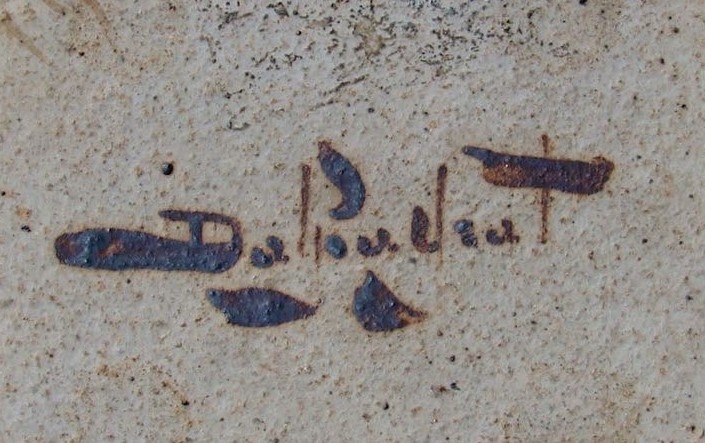
Pierre-Adrien Dalpayrat (1844-1910)
Download PDFPierre-Adrien Dalpayrat, born in Limoges in 1844 and died in 1910, is one of the great ceramicists of the revival of stoneware in France in the late nineteenth century. After years spent in faience works in the south of France, in 1889 he opened his own workshop at Bourg-la-Reine, near Paris, where he perfected a deep copper red, "Dalpayrat red", close to the Chinese sang de bœuf. Rewarded at the Expositions Universelles of 1893 and 1900, he is today represented at the Musée d'Orsay, the Victoria and Albert Museum and in many French collections.
Training and years of travel
Dalpayrat was born in Limoges, the capital of porcelain. From 1859 he attended the town's drawing school, then its practical school of porcelain painting. His career began like that of many craftsman-ceramicists of the time, from factory to factory. He worked in Bordeaux at the Jules Vieillard et Cie faience works, where he married Marie Tallerie, then for Léon Sazerat in Limoges in 1873, at the Ashwin faience works in Valentine (Haute-Garonne) in 1874, for Fouquet in Toulouse around 1875, and finally in Monaco, at the factory of François Blanc (in 1876 or 1878 depending on the source). He returned to Limoges to Sazerat's after 1887.
Bourg-la-Reine (1889-1906)
In 1889 Dalpayrat opened his own faience works at Bourg-la-Reine, on what is now the avenue du Général-Leclerc. His wife and sons Albert, Adolphe, Hippolyte and Paul worked with him. The workshop produced both unique pieces and artistic stonewares at accessible prices, alternating flambé stonewares and more classic faience because of recurring financial difficulties.
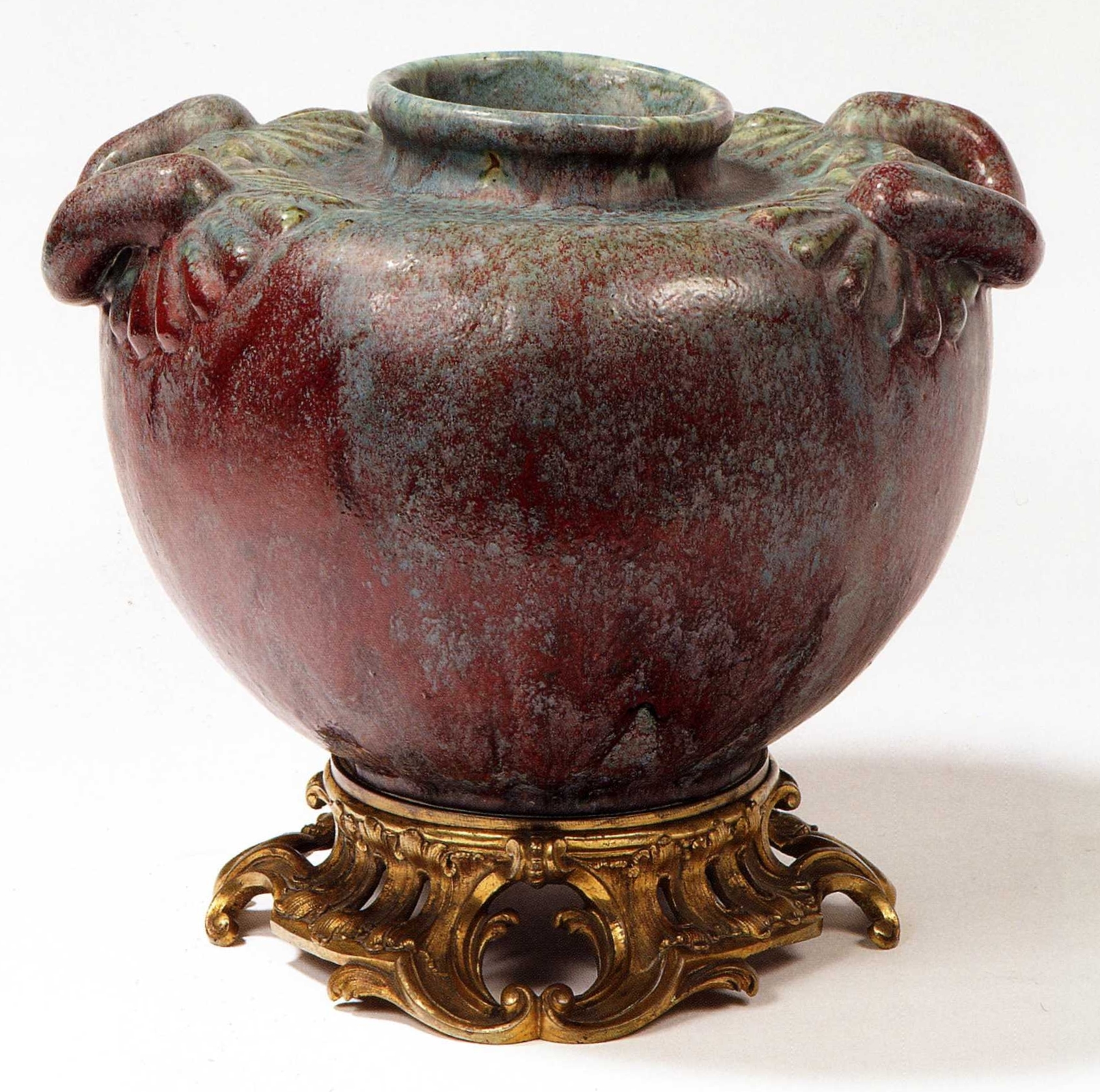
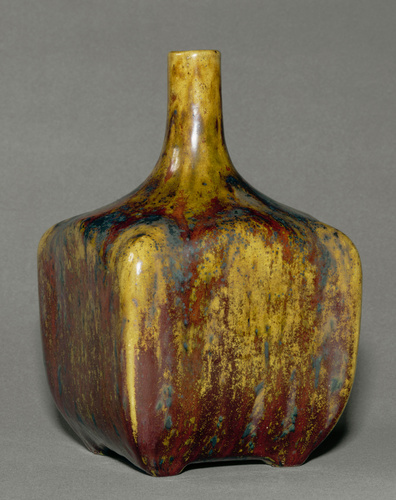
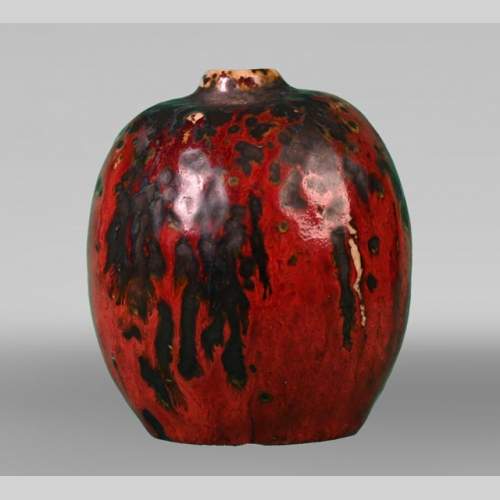
Dalpayrat made his name through his mastery of stoneware and firing. His red was obtained with copper oxide, by controlling the atmosphere, duration and temperature of the firing. Depending on the proportions and the running of the kiln, the glaze gives blood red but also moss greens, ambers and leaden greys. This palette, inspired by the Chinese sang de bœuf and by Japonisme, made his international reputation; the Victoria and Albert Museum holds a 1896 stoneware vase with a red flambé glaze.
Collaborations
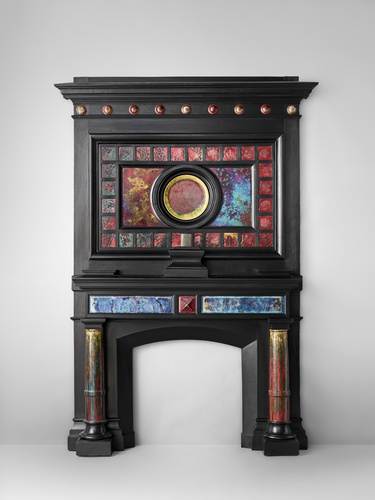
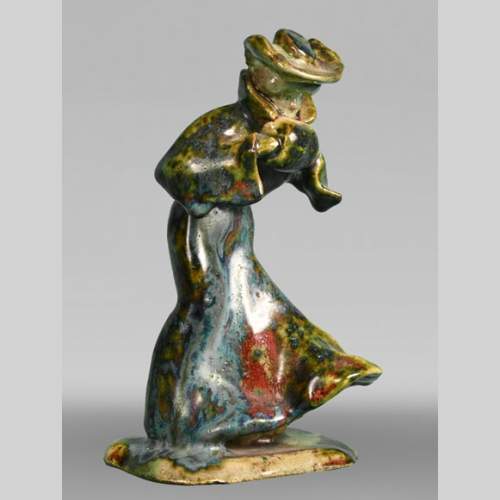
The Symbolist sculptor Alphonse Voisin-Delacroix (1857-1893) modelled figures for his vases, under a contract signed in 1892 that his early death cut short. Adèle Lesbros was Dalpayrat's partner: she supported him financially and worked with him, under the signature "Dalpayrat et Lesbros", from about 1894 until 1901 or 1905 depending on the source. Together they made La Cheminée, a large stoneware fireplace of 1893-1894 kept at the Musée d'Orsay.
Some pieces received gilt-bronze or metalwork mounts, made by Parisian houses such as the jewellers Ernest Cardeilhac and Keller.
Exhibitions and awards
In 1892 an exhibition at the Galerie Georges Petit was a great success. Dalpayrat received medals at the Chicago Exposition in 1893 (bronze or gold depending on the source), then a gold medal at the Paris Exposition Universelle of 1900. He was made a Knight of the Légion d'honneur in 1900 according to some sources.
The last years
The business closed in 1906, for lack of financial stability. Dalpayrat retired to Limoges; he died in 1910 (in Paris according to the Musée d'Orsay, in Limoges according to other sources). His son Adolphe (1871-1934) continued his father's work at Bagneux from 1909.
Dalpayrat in collections
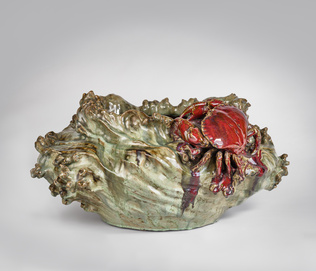
The Musée d'Orsay holds notably La Cheminée (1893-1894), a jardinière Crab in a Wave, known as "La mer" (1896), several vases and a bust of a young woman (1893). His works are also in the Musée des Arts décoratifs, the Petit Palais, the Musée Adrien-Dubouché in Limoges, Sèvres, Douai, the Victoria and Albert Museum and the Metropolitan Museum of Art in New York. At Bourg-la-Reine his house and workshop now house a museum devoted to him, with more than one hundred and twenty pieces. A Paris garden has borne his name since 1985, and a 1994 stamp shows one of his stoneware teapots.
See also
Jules Vieillard et Cie, Bordeaux — The Longwy Manufactory — Art Nouveau — The 1900 Exposition Universelle
See our ceramics, faience and porcelain
Bibliography
Institutional sources
Musée d'Orsay, Paris, entry "Adrien Dalpayrat (1844-1910)", catalogue of artists and personalities; works: La Cheminée (1893-1894), Jardinière: Crab in a Wave, known as "La mer" (1896).
Victoria and Albert Museum, London, Vase, stoneware with red flambé glaze, Bourg-la-Reine, 1896, inv. 497-1896.
Online resources
"Pierre-Adrien Dalpayrat", Wikipedia (French and English versions).
Galerie Origines, booklet "Dalpayrat", galerieorigines.com.