Style Neo-Renaissance / Ref.10917
Édouard LIÈVRE (Author of the model, 1829 – 1886), Paul SORMANI (cabinetmaker, 1817 – 1874 or 1875) Neo-Renaissance ceremonial sideboard and buffet
Dimensions
Width: 230 cm / 90'' ½
Height: 262 cm / 103'' ⅛
Depth: 66 cm / 26''
Origin:
French
This exceptional set of neo-Renaissance furniture designed by Édouard Lièvre was crafted by Paul Sormani, a renowned Italian cabinetmaker based in Paris. Enhanced with gilded bronze, marble inserts, and enamel plaques, this ceremonial sideboard and buffet are extremely refined and erudite. The pieces are signed with the initials “EL” and bear the Sormani workshop plaque. After the cabinetmaker's death, the company took the name “Veuve Sormani et Fils,” whose furniture bears the signature from 1877-1880 onwards. Signed “Paul Sormani,” our set would therefore predate 1877.
The sideboard rests on two fluted Corinthian columns with rings. A series of drawers frames a sea green marble top. The imposing top is made of marble and the molded backrest features gilded bronze inserts. The popularity of troubadour painting and romantic subjects certainly explains the choice of characters for the gilt bronze medallions depicting the profiles of Charles VII and his mistress Agnès Sorel. The medallions are framed by bronze appliqués decorated with candelabra scrollwork. In the center of the composition, a diamond shape displays its gilt bronze scrollwork.
The ceremonial sideboard is also richly decorated and full of references to Renaissance art. The lower section is organized around three central semicircular niches composed of rare bulging columns; the spandrels are decorated with sea green marble inserts. The doors feature two superb gilt bronze medallions depicting the profiles of Henry IV and his mistress Gabrielle d'Estrée: the Renaissance period and the theme of passionate love are once again mythologized and elevated to romantic ideals. The pilasters feature marble diamond motifs, typical of 16th-century ornamentation. Édouard Lièvre combines different artistic media by inserting decorative enameled plaques into the upper register doors. These are directly inspired by the bas-reliefs of the Fontaine des Innocents created in 1548 by Jean Goujon, a famous sculptor at the court of Henry II. They are flanked by gilded bronze appliqués in the Renaissance style (festoons, mascaron, foliage, volutes). The upper register is organized around two semicircular niches composed of fluted and ringed Corinthian columns. The projections of the cornice feature a frieze of Greek waves and sea green marble plaques. The ensemble is crowned with coats of arms supported by gilded bronze acanthus leaves.
The sideboard and its buffet are fine examples of Édouard Lièvre's talent for reinterpreting antique styles using modern techniques (electroplating) and his collaborations with the greatest cabinetmakers of the period. As well as reflecting the popularity of the Neo-Renaissance style in France during the 19th century, this set once again demonstrates the archaeological interest and immense erudition of its designer, who found inspiration in the streets of Paris and the capital's museums. In a similar style, Lièvre created a mirror for Sarah Bernhardt around 1875 and several Neo-Renaissance cabinets, some of which are decorated with decorative enamel plaques. In addition, the catalog of the dispersal of Édouard Lièvre's estate (Drouot sale, March 21-24, 1887) lists nearly fifteen Neo-Renaissance pieces of furniture.
Informations
Price: on request
Recommended for you :
Dimensions:
Width: 122
Height: 76
Depth: 82
Dimensions:
Width: 85
Height: 82
Depth: 57
Dimensions:
Width: 144
Height: 110
Depth: 45
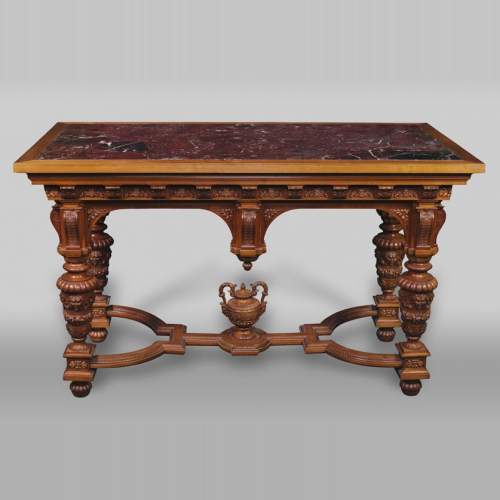
Dimensions:
Width: 150
Height: 88
Depth: 80
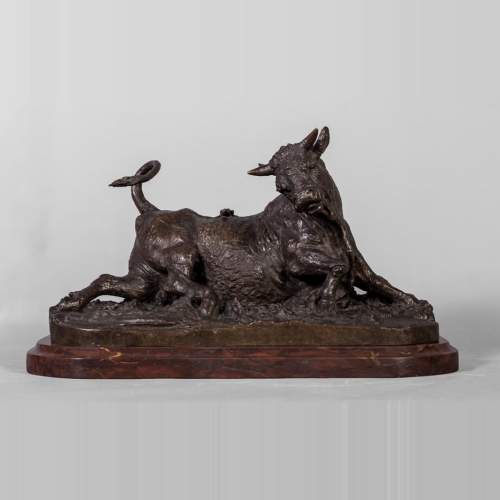
Dimensions:
Width: 47
Height: 23
Depth: 26
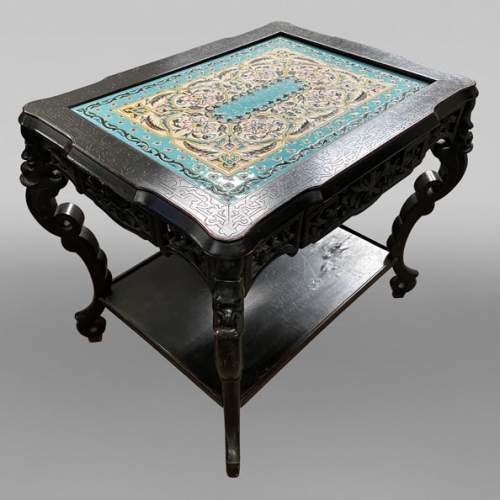
Dimensions:
Width: 92
Height: 77
Depth: 71
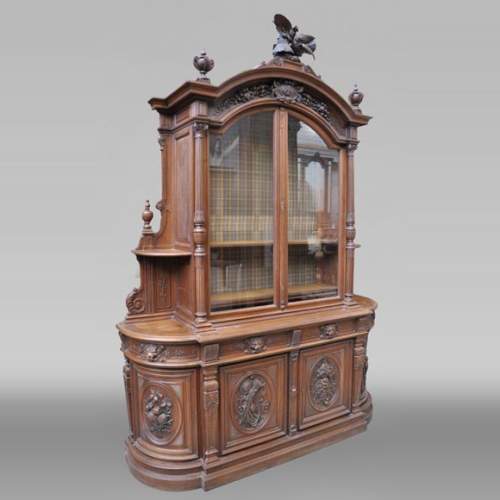
Dimensions:
Width: 220
Height: 302
Depth: 60
Dimensions:
Width: 209
Height: 294
Depth: 61
Dimensions:
Width: 72
Height: 255
Depth: 40
Dimensions:
Width: 140
Height: 79
Depth: 136
Dimensions:
Width: 303
Height: 76
Depth: 115