




Style Neo-Renaissance / Ref.10911
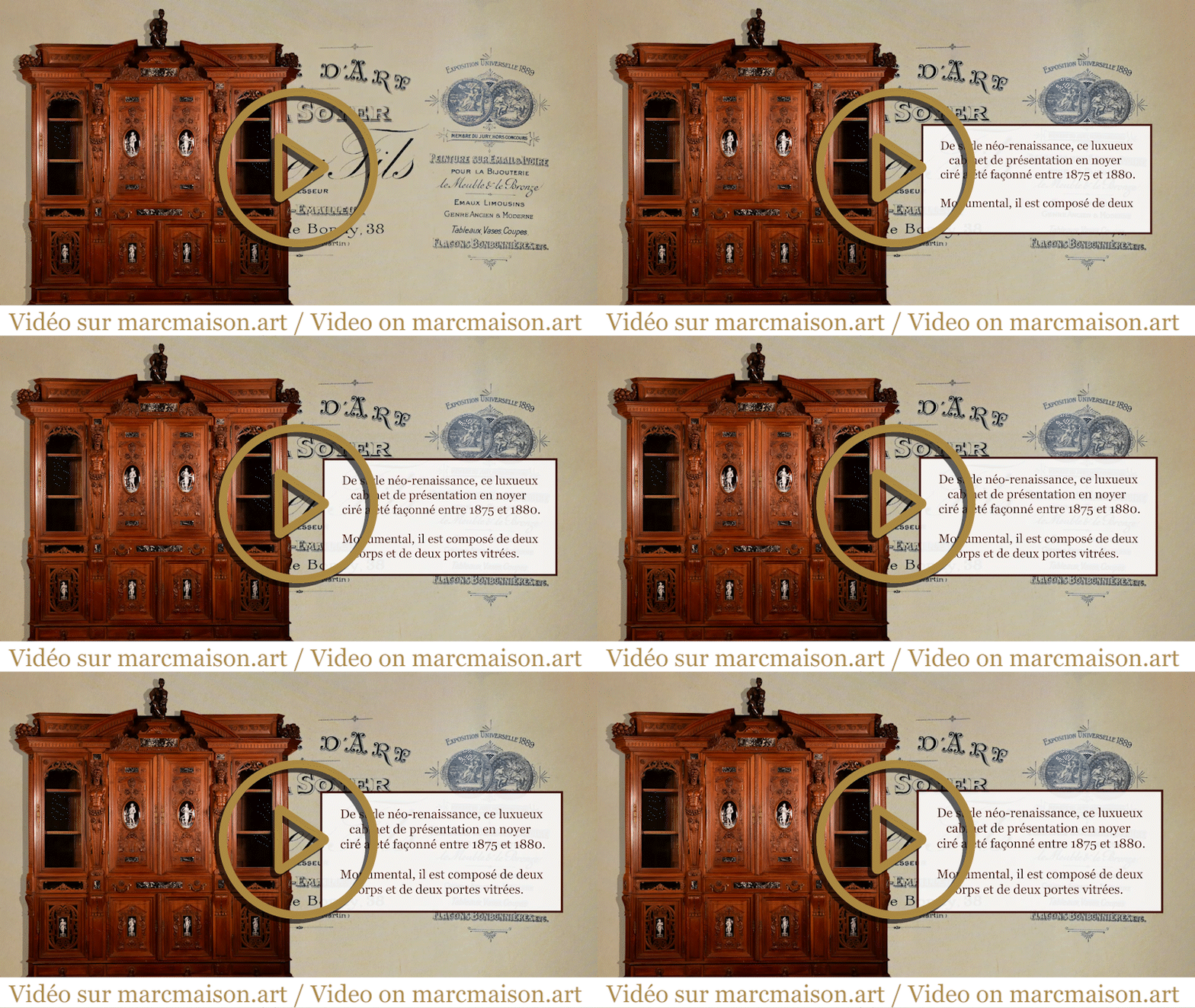
MAZAROZ-RIBAILLIER & SOYER Théophile — Important Neo-Renaissance carved walnut display cabinet with painted enamel plaques
Dimensions
Width: 225 cm / 88'' ⅝
Height: 254 cm / 100''
Depth: 58 cm / 22'' ⅞
Origin:
Paris, circa 1875–1880
Jean-Paul Mazaroz, born in 1823 in Lons-le-Saunier, entered into partnership in 1852 with Pierre Ribaillier, a manufacturer of carved furniture established on the boulevard des Filles-du-Calvaire. The firm of Mazaroz-Ribaillier, whose workshops were located on the rue Ternaux-Popincourt, rapidly established itself as one of the foremost Parisian manufacturers of carved solid wood furniture, winning prizes at the Universal Exhibitions of 1855, 1867 and 1878. The cabinet bears on its reverse the stamped mark P. MAZAROZ R followed by the manufacture number 24418. The painted enamel plaques are signed with the initials of Théophile Soyer (1853–1940), one of the great enamellers of the second half of the nineteenth century. Executed in black and white camaïeu, with white figures on a black ground in the manner of Renaissance Limoges enamels, these early works stand apart from the vibrant and colourful production for which Soyer would later become celebrated. Théophile Soyer exhibited for the first time at the Salon of 1870 and was awarded a silver medal at the Universal Exhibition of 1889, followed by a gold medal at that of 1900. This two-body cabinet in carved waxed walnut is in the Neo-Renaissance style. The upper section, flanked by two bearded atlantes wearing turbans of Oriental inspiration, opens through two glazed doors. The lower section is decorated with four rectangular enamel panels representing the Seasons personified by putti, while the main doors receive two large domed oval plaques depicting respectively Apollo slaying the Python and Diana the huntress, set within carved surrounds of floral bouquets, lion masks and coin friezes. Nero Marquina marble panels animate the overall decoration. The cabinet is surmounted by a broken pediment ornamented with cornucopiae, at the centre of which stands a bronze reduction of the statue of Lorenzo II de' Medici after Michelangelo, published by the Barbedienne foundry.
For more information on this work, see the video on MarcMaison.art.
Informations
Price: on request
Recommended for you :
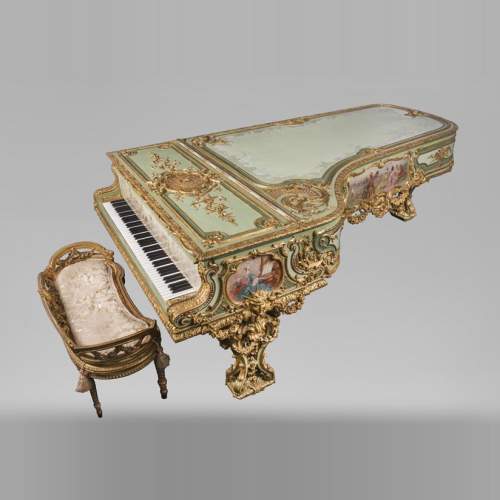
Dimensions:
Width: 275
Height: 109
Depth: 155
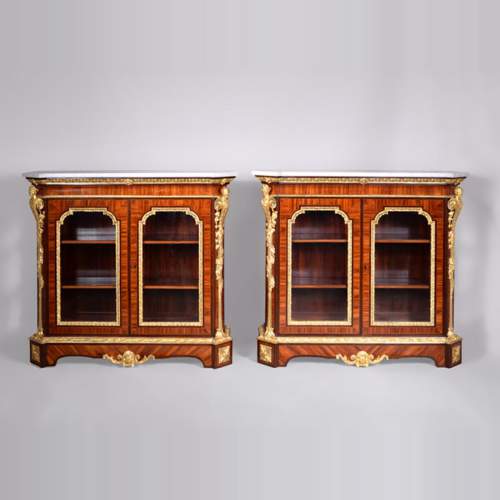
Dimensions:
Width: 128
Height: 110
Depth: 34
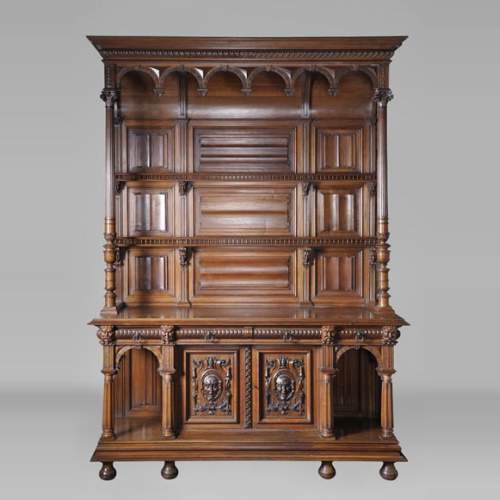
Dimensions:
Width: 198
Height: 274
Depth: 63
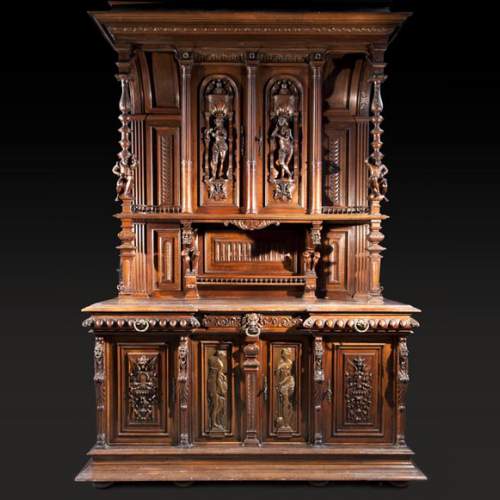
Dimensions:
Width: 174
Height: 255
Depth: 62
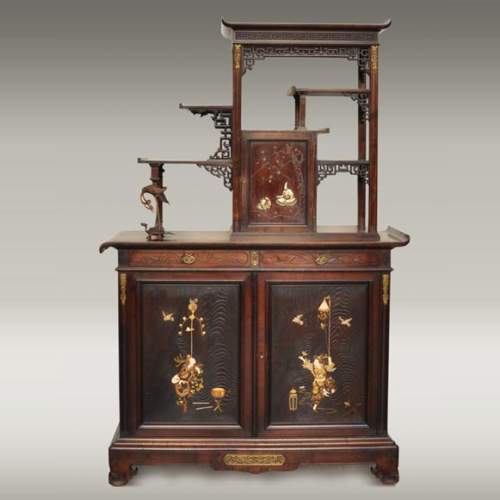
Dimensions:
Width: 110
Height: 170
Depth: 39
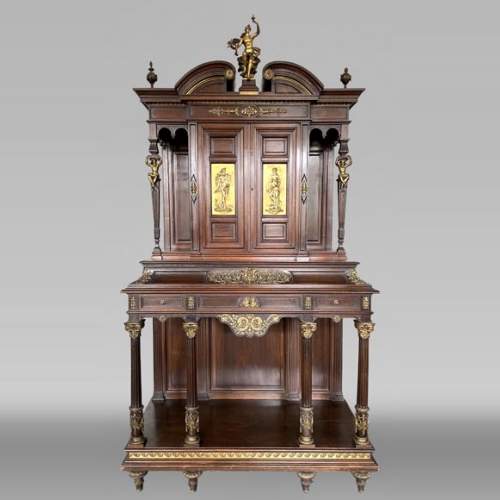
Dimensions:
Width: 111.5
Height: 216.5
Depth: 53
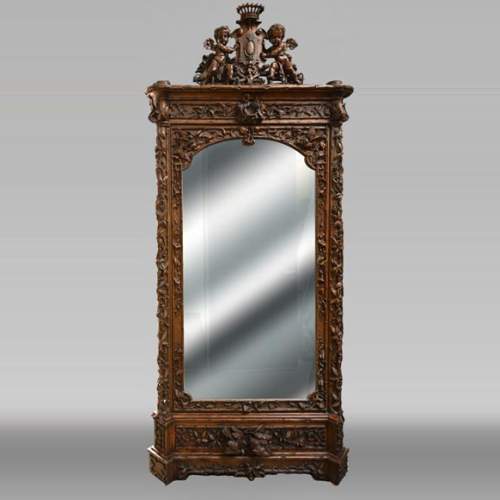
Dimensions:
Width: 124
Height: 275
Depth: 58
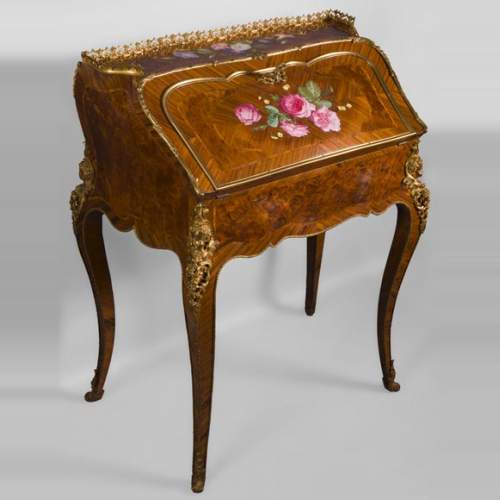
Dimensions:
Width: 76
Height: 91
Depth: 45
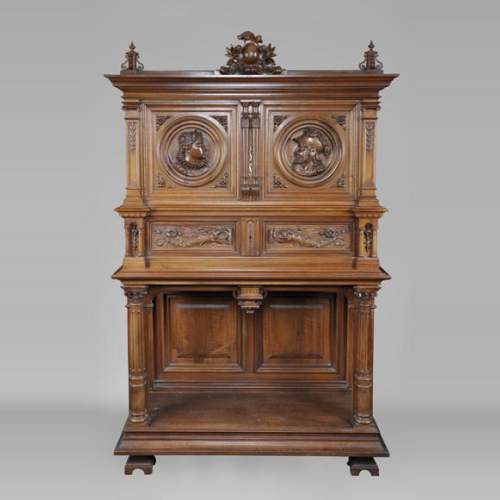
Dimensions:
Width: 135
Height: 216
Depth: 56
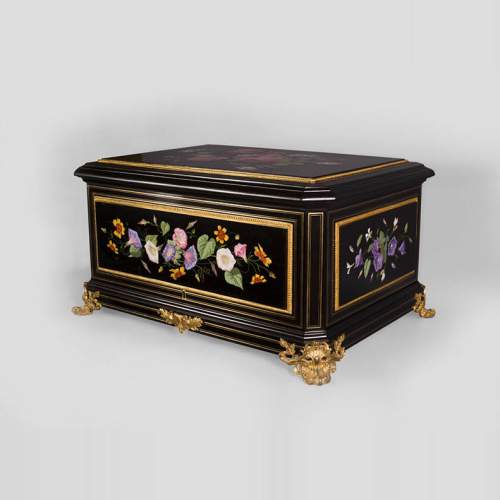
Dimensions:
Width: 76
Height: 40
Depth: 55
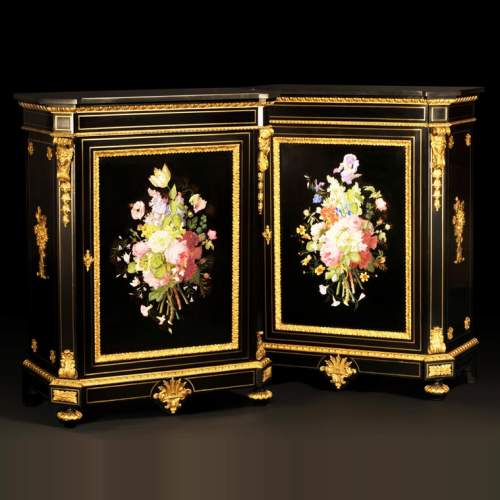
Dimensions:
Width: 90
Height: 113
Depth: 44
Dimensions:
Width: 89
Height: 106
Depth: 48