menu
Menu
account_box
Categories
Contact
email Send us a message

Contact

phone By phone

+33 (0)1 42 25 12 79
Tue.-Sat., from 10am to 6pm
+33 (0)6 60 62 61 90
Everyday from 9am to 7pm.

email by Email

Adress: contact@marcmaison.com

share Let's get social

Languages
And also...
My selection
(8 Objects)
My selection (8 Objects)

Julien-Nicolas RIVART (1802-1867) - Exceptional Jewel Case decorated with porcelain marquetry from Elsa Schiaparelli’s collection

Ref.10712
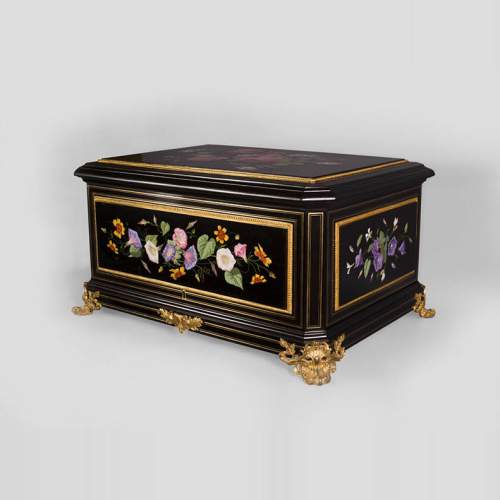
Julien-Nicolas RIVART (1802-1867) - Exceptional Jewel Case decorated with porcelain marquetry from Elsa Schiaparelli’s collection

This large jewel case, which sophisticated decoration of porcelain inlay contrasts with blackened wood, bears the signature of Julien-Nicolas Rivart , inventor of the porcelain marquetry process. The latter patented his innovative technique he was the only one to master in 1849, which opened the doors of the most prestigious commissions to him, including those of the Imperial couple, Napoleon III and Eugenie. The sobriety of the case, bordered with black and gold laces, is only broken by small gilt bronze mounts depicting shells and foliage borrowed from the Louis XV style vocabulary. The interior, just as beautiful, has the warm tone of the rosewood veneer. The delicacy and rarity of this object were recognized by the woman of taste that Elsa Schiaparelli was, since it was in the possession of this major personality of fashion and of 1930's Paris, who made it her jewelry case. Elsa Schiaparelli, born in 1890 at the Corsini Palace in Rome, was a figurehead of haute couture between 1930 and 1950. Friend of the Surrealists in the 1920's, she always promoted avant-garde and creativity, but this case is the witness of her personal sensitivity to other aesthetics and her receptivity to the poetry of things. Perhaps she had also recognized her fetish color in the roses on the lid, the "Rose Shoking". The decoration of flowers, blue and white campanulas, yellow daisies, roses and jasmines, here is of extreme finesse. These are inlays of porcelain, and painted resin for the thinnest foliage, a technique arrived at its perfection in the last years of Rivart 's career. The address engraved on the inside, 26 Boulevard Baumarchais, is indeed that of his last workshop, from 1860 to his death in 1867. His reputation was established largely for the competition that represents his new technique of inlay with that of the Florentine hard stones mosaic. The Count de Nieuwerkerke compares indeed his technique to the pietra dura in a letter of 30 March 1857. He uses here the full force of this comparison, bringing out his luminous porcelain on a deep black background. Porcelain has the advantage of enabling a more detailed cut-out, and therefore very fine details whose colors appear beautifully. But above all, it is a painted decoration that the wood panels are receiving, allowing magnificent hues and lights effects. The box lid is decorated with roses and jasmines, the ultimate flowers of romance, while the sides are dotted with wild flowers, bellflowers and daisies, which evoke innocence and coquetry. Contrasting colors accentuate the luminosity of these floral compositions, so the deep pink makes all the more vibrant the leaves of jasmine's aqua green, and the orange of the daisies revives the campanulas' blue. The precision of the floral decorations of Rivart had already owed him in 1852 a medal awarded by the National Society of Horticulture. Here, we can indeed admire the work of an illusionist brush that has kept the freshness and lightness of its subject. These flowers immortalized in the kaolin could not find more suitable support than porcelain for this luxurious beauty accessory.

Dimensions:
Width: 76 cm
Height: 40 cm
Depth: 55 cm

Beautiful antique Art Nouveau style chandelier in gilt bronze and molded glass with languid bodies and nine lights

Ref.10877
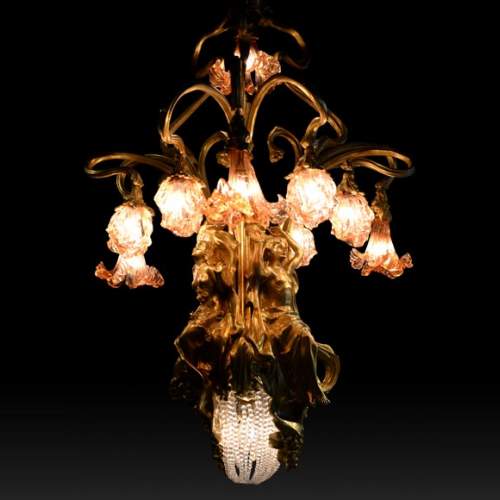
Beautiful antique Art Nouveau style chandelier in gilt bronze and molded glass with languid bodies and nine lights

This gilt bronze chandelier was made in the late 19th century. In accordance with the Art Nouveau aesthetic, curves and flowers constitute the decoration of this very worked art object. Two women and a man, surrounded by foliage and flowers, are represented in this imposing bronze piece. Their bodies are languid with vegetal volutes, indefinite curves and undulating drapes. The chest of the women with the widespread hair is discovered while the thin and juvenile torso of the man is exhibited. Through their nakedness, their languorous pose, the tranquility of their closed eyelids, emanates a certain sensuality. Modern reinterpretation of the Three Graces or simple representation of the personified nature, this chandelier is composed of Art Nouveau typical motifs. The Art Nouveau floral repertoire originated in the Japanese art discovered by Westerners during the 1867 World's Fair, which brought them a new and more abstract line, and new motifs, notably this obsession for nature. Associated with the taste at this time for mysteries and for the metamorphoses, the « woman-flower » them will be one of the most appreciated among the artists, as this luminary illustrates, whose the three bodies seem to be confused with the vegetation. Moreover, the chandelier itself seems to metamorphose into plants, as often in the Art Nouveau style. Nature, which may be a decor or a pattern, sometimes gives the shape of the object designed. Here, the classical structure of the chandelier is to a certain extent preserved, but in a "deformed" way: nature took back her rights. Thus, the lights have the shape of branches whose the ends are flowers made of pink glass, some are bloomed, others closed. This god and these goddesses of flora thus dress the chandelier, which ends in the lower part by a very preciousness glass beaded curtain, illuminated by a hidden bulb. This chandelier, where flora and men become mixed up, is characteristic of Art Nouveau aesthetics. The multiple arabesques and undulations that animate it give an impression of movement enhanced by the presence of light and its reflections on the glass. This movement is a recurrence in the Art Nouveau style and in its organic ornamentation, and the dancer Loïe Fuller will reverse the roles by giving body to a flower.

Dimensions:
Width: 67 cm
Height: 105 cm
Depth: 67 cm

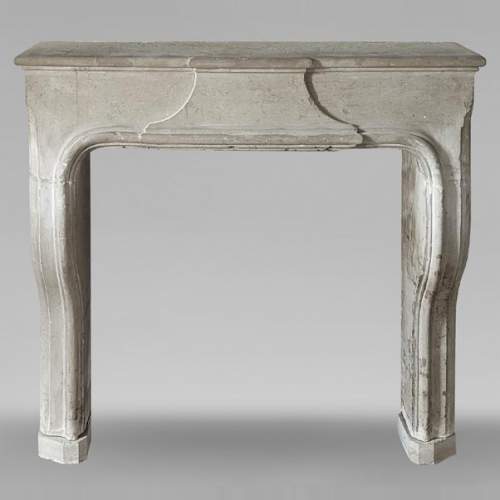
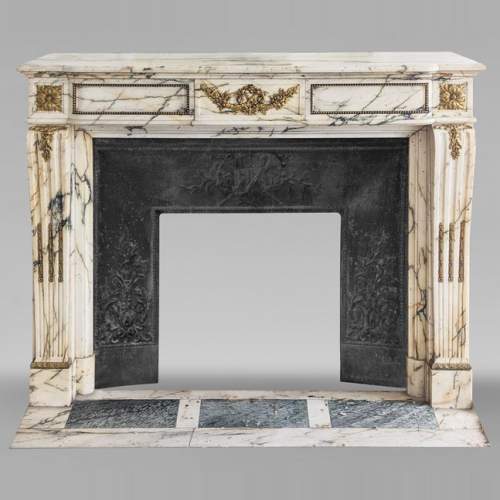
Small Burgundian-style fireplace carved in stone

Dimensions:
Width: 126 cm
Height: 114 cm
Depth: 32 cm
Inner width: 94 cm
Inner height: 89 cm

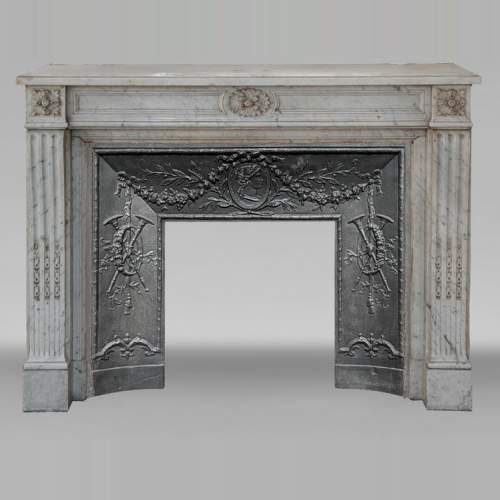
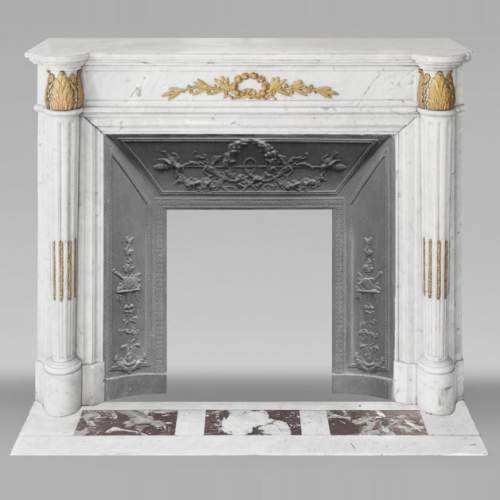
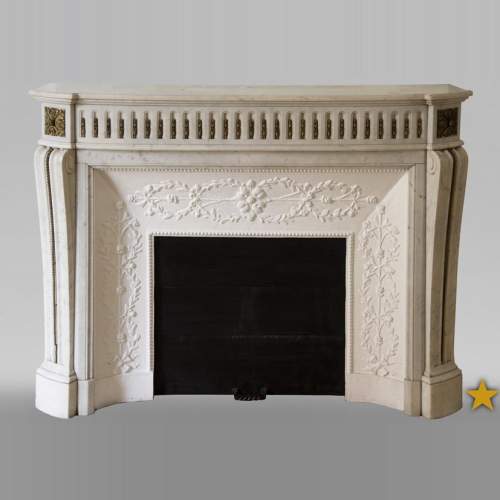
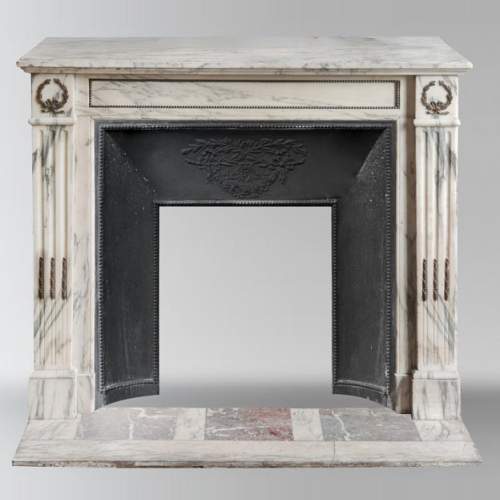
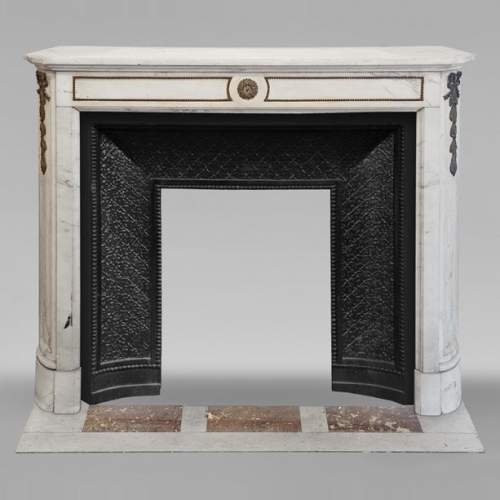
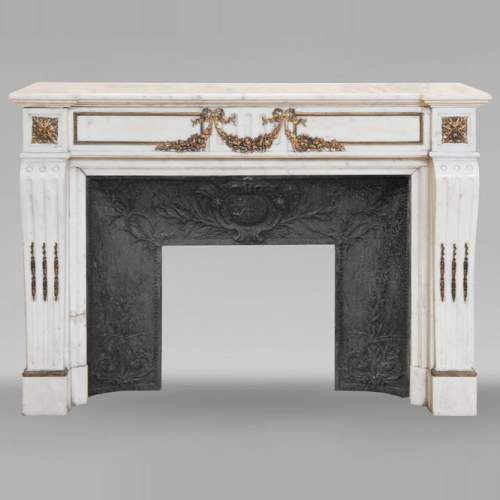
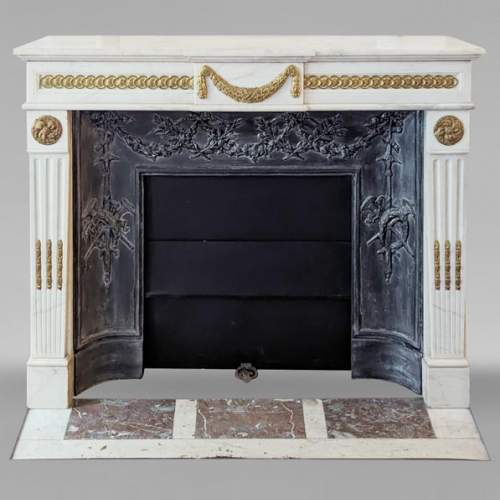
Louis XVI style fireplace in Carrare marble, decorated with floral fluting

Dimensions:
Width: 143 cm
Height: 107 cm
Inner width: 40 cm
Inner height: 84 cm

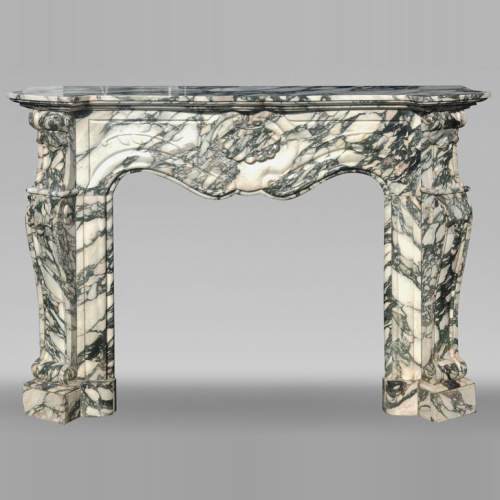
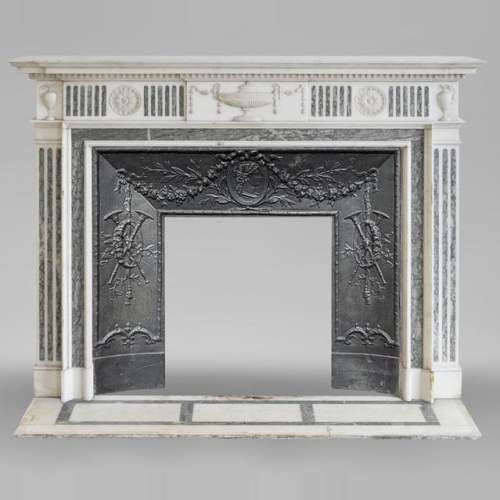
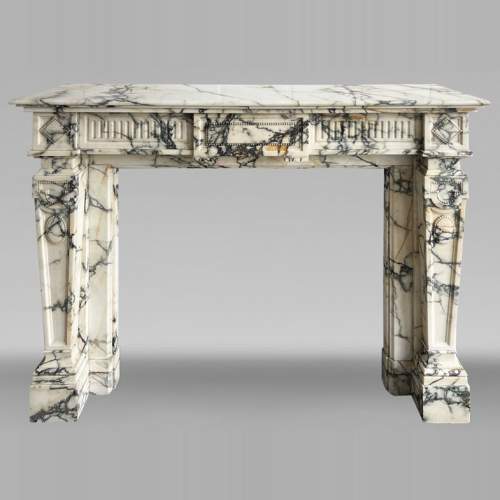
Modern Louis XV style fireplace in green veined marble

Dimensions:
Width: 167 cm
Height: 125 cm
Inner width: 94 cm
Inner height: 93 cm

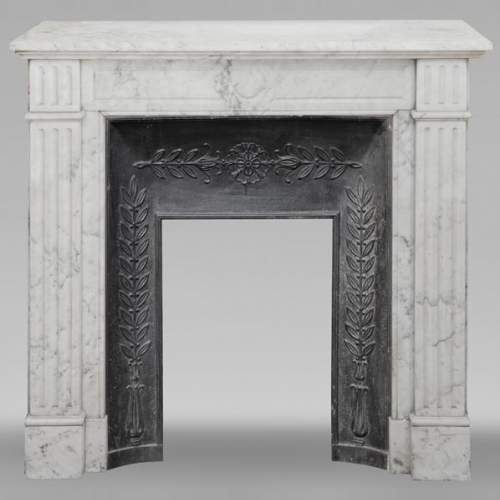
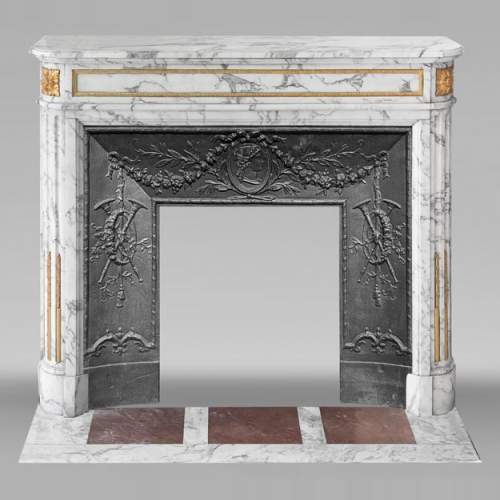
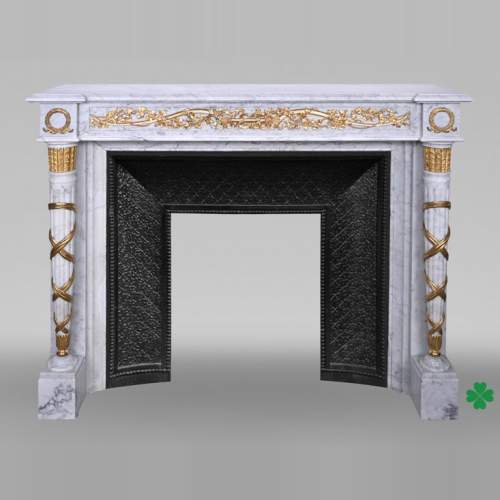
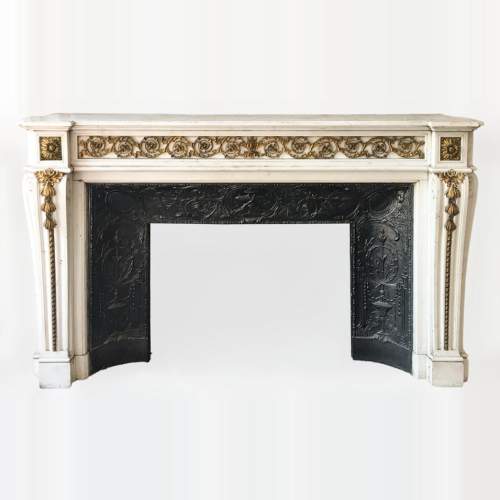
Louis XVI style molded fireplace, in Arabescato marble

Dimensions:
Width: 106 cm
Height: 101 cm
Depth: 35 cm
Inner width: 65 cm
Inner height: 83 cm