Willy Guhl (1915-2004)
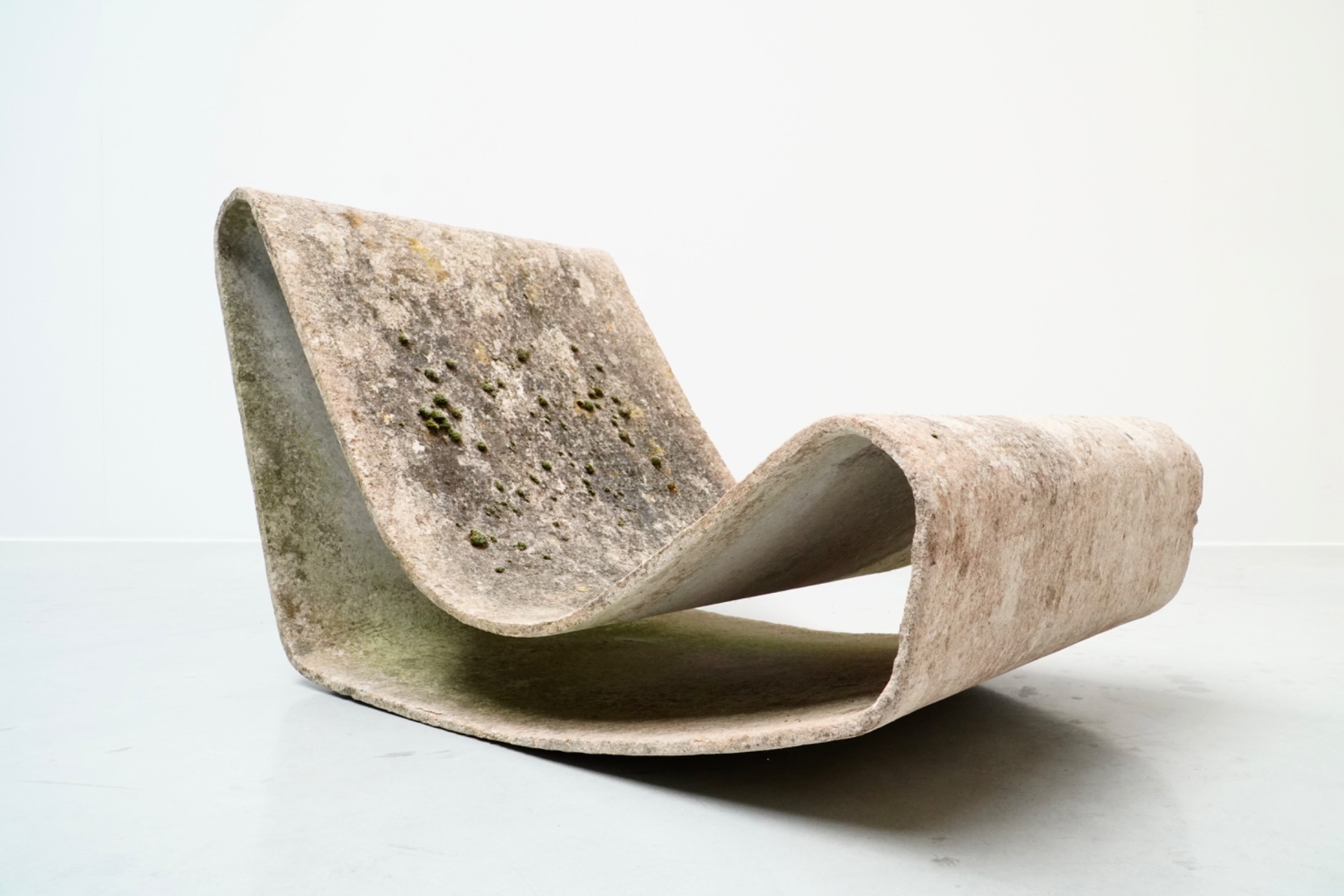
Download PDFIn the history of twentieth-century design, Willy Guhl remains famous for a single object: the Loop Chair, the fibre-cement garden seat designed in 1954 for the Swiss firm Eternit, whose form rests on one continuous loop. But he was also one of the first in Europe to design a plastic shell seat, a teacher who trained generations of interior architects and designers over nearly forty years, and one of the founders of the professional associations of Swiss design.
From a joinery workshop to interior architecture
Willy Guhl was born on 6 July 1915 in Stein am Rhein, in the canton of Schaffhausen. His father, Wilhelm, was a furniture joiner; his mother was Marie Singer. He himself trained as a furniture joiner in Schaffhausen (1930-1933), then studied interior architecture at the Kunstgewerbeschule in Zurich (school of applied arts) from 1934 to 1938, notably under Wilhelm Kienzle. He graduated there as an interior architect. In 1939 he opened his own studio.
A teacher who left his mark on Swiss design
From 1941 until 1980, Guhl taught at the Kunstgewerbeschule in Zurich, today part of the Zurich University of the Arts (ZHdK). He took over the interior-design class in 1951 and turned it into a course in interior architecture and product design, one of the few training programmes of its kind in Switzerland. His students included Robert Haussmann and Bruno Rey.
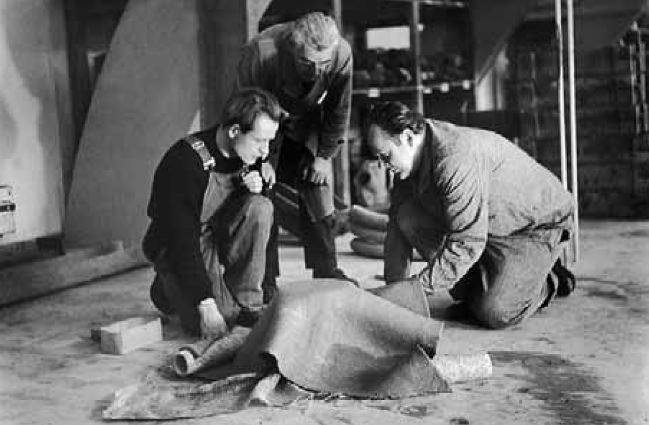
His method lies in the phrase that gives its title to the exhibition devoted to him by the Museum für Gestaltung in Zurich: thinking with your hands. Rather than drawing at the desk, he had his students work directly with the material, through models and in the workshops, in contact with craftsmen. In 1943 he co-founded the Swiss Association of Interior Architects (VSI) and, in 1966, the Swiss Industrial Designers Association (SID).
The plastic shell seat
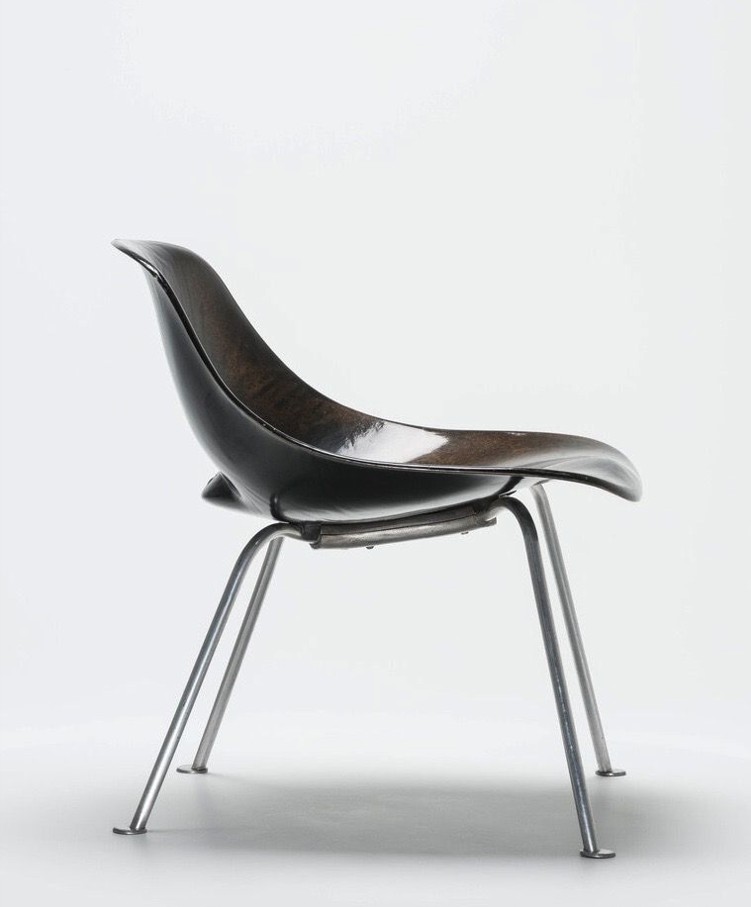
In the early 1950s, Guhl developed with the firm Dietiker a shell seat in fibreglass-reinforced resin (Scobalit), derived from the imprint of the seated body in several positions. The Zurich museum presents it as one of Europe's first plastic shell seats.
Eternit and the Loop Chair
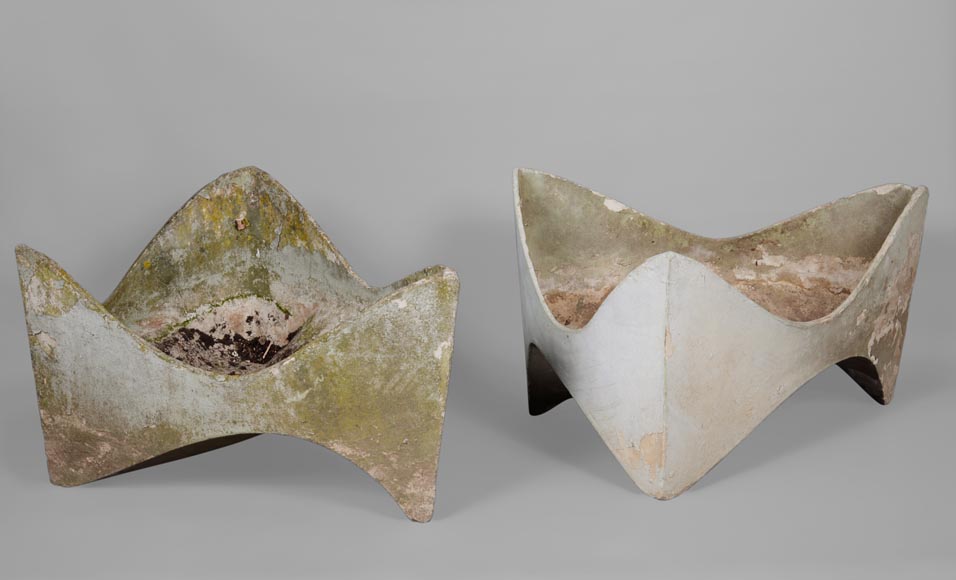
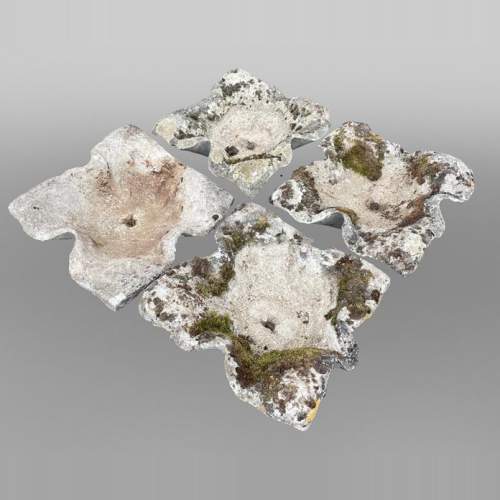
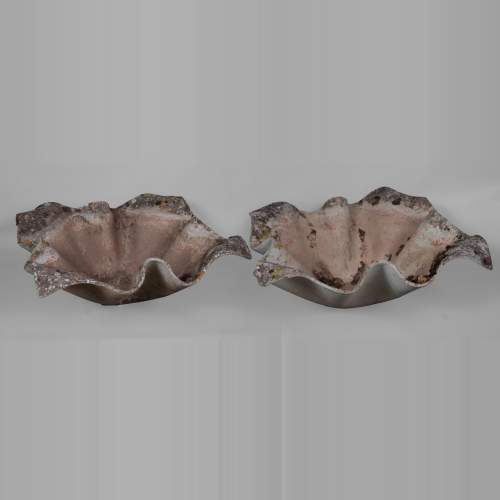
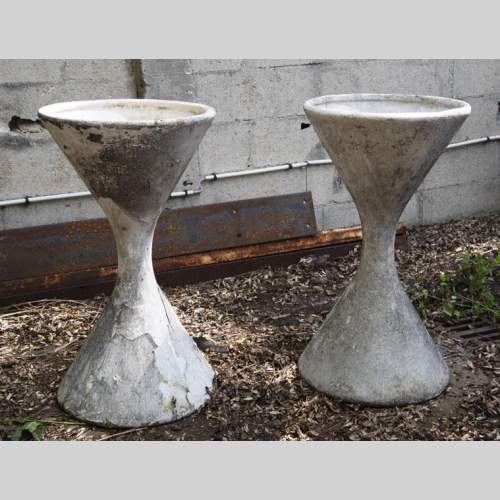
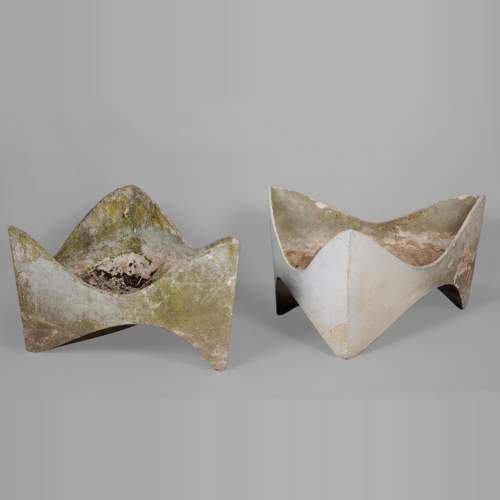
In 1951-1952, the fibre-cement company Eternit, based in Niederurnen in the canton of Glarus, asked Guhl to design new plant containers. He drew planters and flower boxes, which received the Swiss Die gute Form ("good form") label in 1955 and 1960.
In 1954, after watching how fibre-cement sheets were made at the factory, he conceived a garden and beach seat made from a single strip of material closed on itself into a loop. The form is both an ergonomic answer — the loop wraps around the body and lends itself to rocking — and a manufacturing solution: the loop form suits the way fibre-cement sheets are made. The Loop Chair (also called the Eternit-Sitz or Strandstuhl) also received the Die gute Form distinction in 1955.
Fibre cement and the question of asbestos
Originally, fibre cement contained asbestos, whose harmfulness was recognised gradually before it was banned in Switzerland in the late 1980s. Production of the original model was abandoned. In the late 1990s, Guhl himself took part in reviving the model in an asbestos-free fibre cement, which has been manufactured again since then, with an unchanged silhouette.
A philosophy of restraint
The Museum für Gestaltung sums up his approach as a holistic conception of design "oriented towards people and their needs: durability, functionality and reduction to the essentials". Guhl readily collaborated with industry, on the idea that the quality object should be accessible to as many people as possible. He championed simple products, economical in material and in means of manufacture, and made to last.
Legacy
Willy Guhl died on 4 October 2004 in the canton of Schaffhausen, aged eighty-nine. The Loop Chair is in the collections of the Vitra Design Museum, and the Museum für Gestaltung in Zurich devoted a retrospective to him in 2022-2023, Willy Guhl — Thinking with Your Hands, accompanied by a monograph published in 2023 by Lars Müller Publishers. His chair has become one of the emblems of postwar Swiss design.
See also
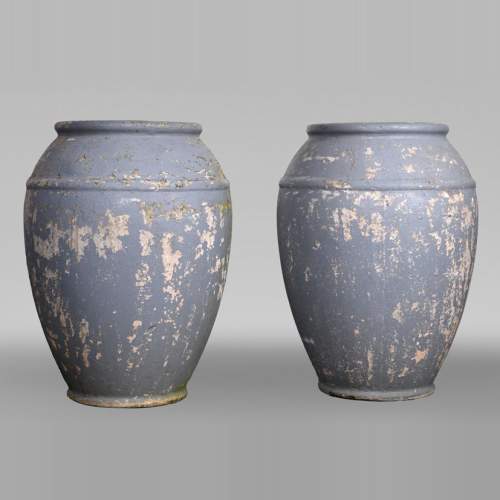
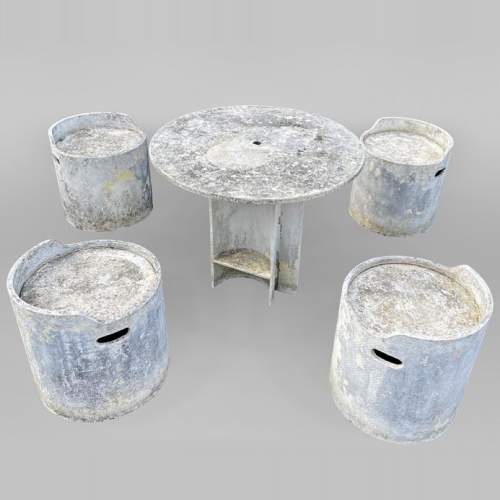
Pair of fibre-cement planters by Willy Guhl, 1950s — Pair of "Diabolo" model planters edited by Eternit, 1950s — Set of 19 concrete planters in Willy Guhl style — Concrete garden furniture attributed to Willy Guhl
Bibliography
Reference entries
"Guhl, Willy", Historical Dictionary of Switzerland (Historisches Lexikon der Schweiz), entry 047060, hls-dhs-dss.ch.
Museum für Gestaltung Zürich, exhibition page Willy Guhl — Thinking with Your Hands, Zurich, 2022-2023.
Swiss National Museum, "Classic Design", Swiss National Museum blog, 2017.
swissinfo.ch, "Schöpfer des Eternit-Liegestuhls gestorben", 2004.
Books
Museum für Gestaltung Zürich, Renate MENZI (ed.), Willy Guhl: Thinking with Your Hands, Zurich, Lars Müller Publishers, 2023, 308 pp. (ISBN 978-3-03778-715-1). Contributions by Ann-Kathrin Hörrlein, Catherine Ince, Dieter Mersch, Jasper Morrison, Arthur Rüegg and Katrin Stowasser.
Public collections
Vitra Design Museum, Weil am Rhein — Eternit-Sitz / Eternit Chair, Loop Chair, 1954.