Victor Paillard
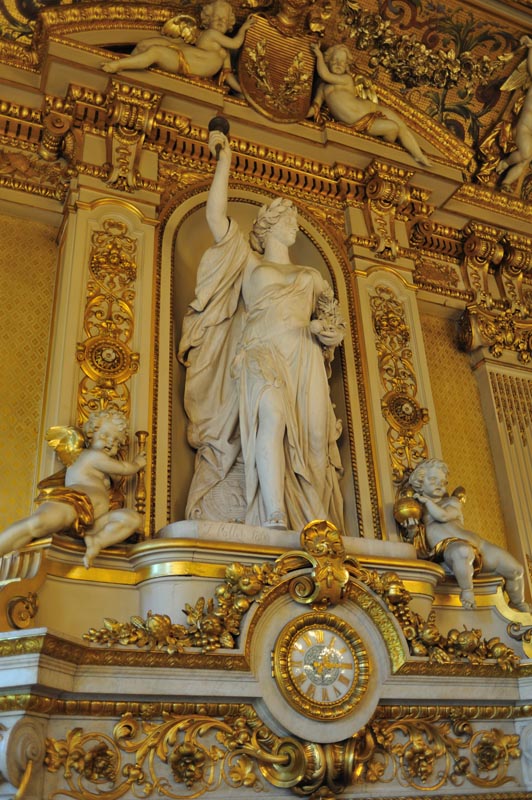
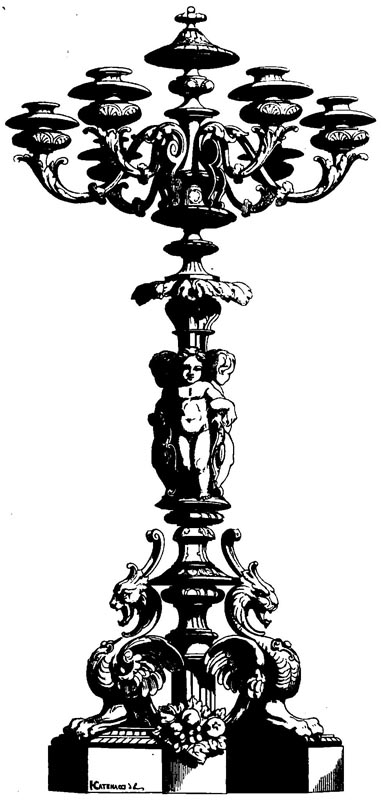
Download PDFVictor Paillard, a bronze-maker and sculptor, was born in the Eure department on the 23rd of Brumaire, Year XIV (1805). At the age of 11, he came under the patronage of a Spanish painter, the Count de Guzman, who took him to Paris to assist with the preparation of paints. In 1828, Victor Paillard began an apprenticeship with Jean-François Denière, a bronze-maker and chaser. Under Denière’s tutelage, he learned the craft while simultaneously attending evening classes taught by Chenavard and the chaser Martinot. In 1835, Paillard established his own firm specializing in artistic and decorative bronzes at 3 Rue de la Perle. Initially, he produced small bronze objects—such as paperweights and document holders—but around 1836, upon joining the Réunion des Fabricants (an association of manufacturers), he expanded his production to include clocks, sculptural groups, statuettes, lamps, chandeliers, and candelabra. He made his debut at the 1839 Exhibition of Industrial Products, where he showcased two large candelabra, a clock featuring the Virgin with a Goldfinch, and a small clock adorned with caryatids in ormolu (gilded bronze)—the latter based on a design by Feuchère. The jury awarded him a silver medal, an honor he received again at the 1844 exhibition. On that occasion, critics heaped praise upon Victor Paillard, noting: "Good taste, respect for the original work of the master sculptor, and flawless execution make Victor Paillard a remarkable manufacturer and an artist of true merit." Victor Paillard was a true artist; he created numerous designs—many depicting young children or cupids—which he then cast in bronze. His reputation grew to such an extent that he was appointed President of the *Réunion des Fabricants de Bronze* (Association of Bronze Manufacturers). At the 1849 exhibition, he was awarded a gold medal. For the 1851 Great Exhibition in London, he oversaw the casting of a colossal seated statue of Queen Victoria, executed in bronze and zinc after a model by Dantan the Younger. Subsequently, his enterprise took a new direction: he came to lead a workforce of two hundred, producing over four hundred different models. In 1855, he was named a member of the jury for the *Exposition Universelle* held in Paris. His renown extended beyond France, leading to work in Belgium, Austria, and—most notably—Russia, where he served Baron Alexander von Stieglitz. He also received several official commissions, most notably for the decoration of the Ministry of Foreign Affairs at the Quai d’Orsay. For this project, he created the clock, the fireplace bronzes, and four chandeliers—featuring chimeras and groups of children—for the *Salon de l’Horloge*, as well as a large Renaissance-style chandelier adorned with figures of children and arabesques for the *Salon du Congrès*, among many other works. Critics heaped praise upon him, noting: "What distinguishes the work of M. Victor Paillard above all else is the remarkably harmonious integration of every individual component that makes up the finished piece."
Beyond the fact that his designs are always an excellent choice and display refined taste, the chasing is exceptionally fine—entrusted as it is to skilled sculptors and chasers such as Messrs. Hayet, Moreau, Fanière, Sauvageot, and Combettes. The mounting is executed with great care, and the ornamentation is beyond reproach. M. Paillard himself serves as his own most reliable designer and finest craftsman. He is not one of those manufacturers who, having never held a pencil in their lives, do not hesitate to claim credit for works with which they had no involvement; while he highlights the contributions of his collaborators, he demands that they be as dedicated and conscientious as he is himself.
In 1868, he entered into a partnership with Louis-Alexandre-Adolphe Romain. Together, they exhibited at the Vienna World’s Fair under the name “Paillard et Romain.” Paillard retired from the business some time later, leaving the firm to Romain, who was unable to sustain its operations and closed the business in 1879. Victor Paillard passed away in Paris in 1886, having previously served as the mayor of the 3rd arrondissement of Paris.
See also
The Denière house — Ferdinand Barbedienne — Marnyhac — 1851 World's Fair — 1855 World's Fair — Renaissance style — Gilt bronze